
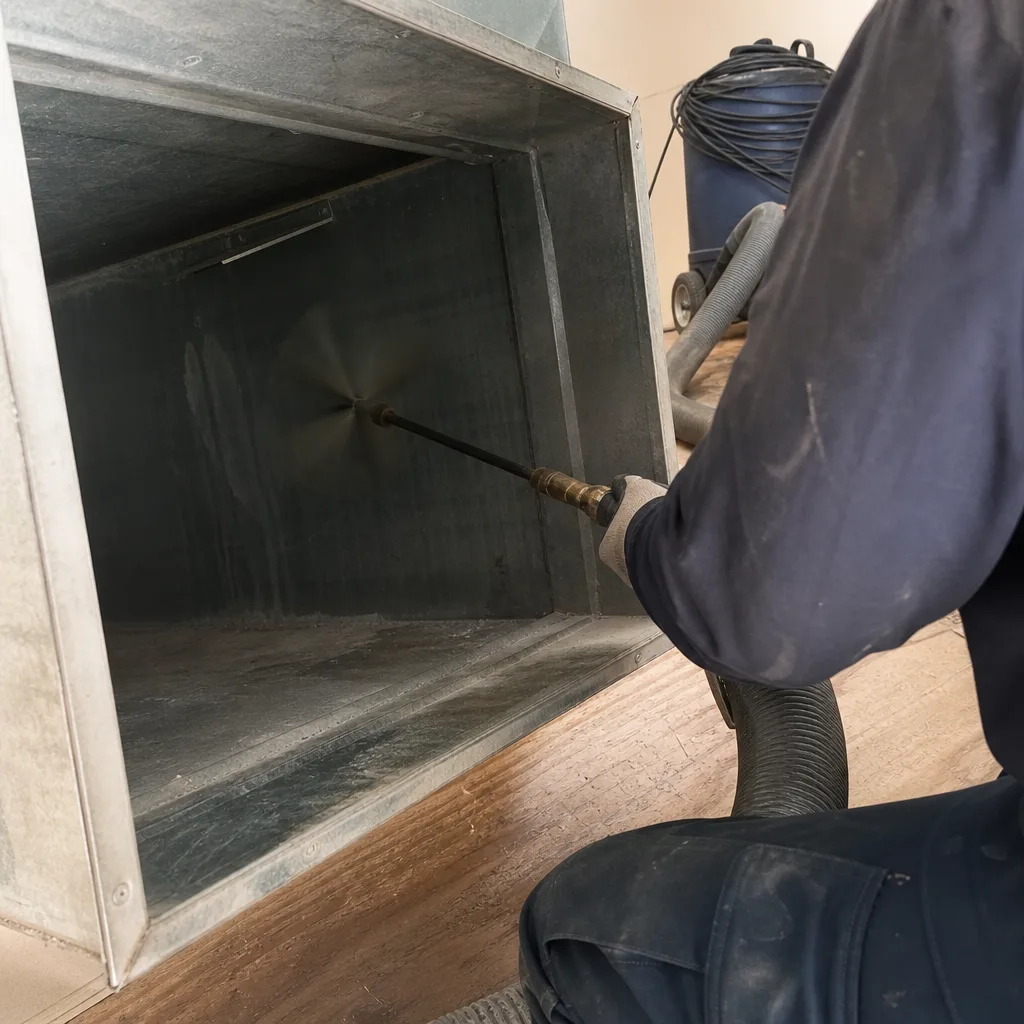
Last updated November 14, 2026
 Whole-home duct cleaning
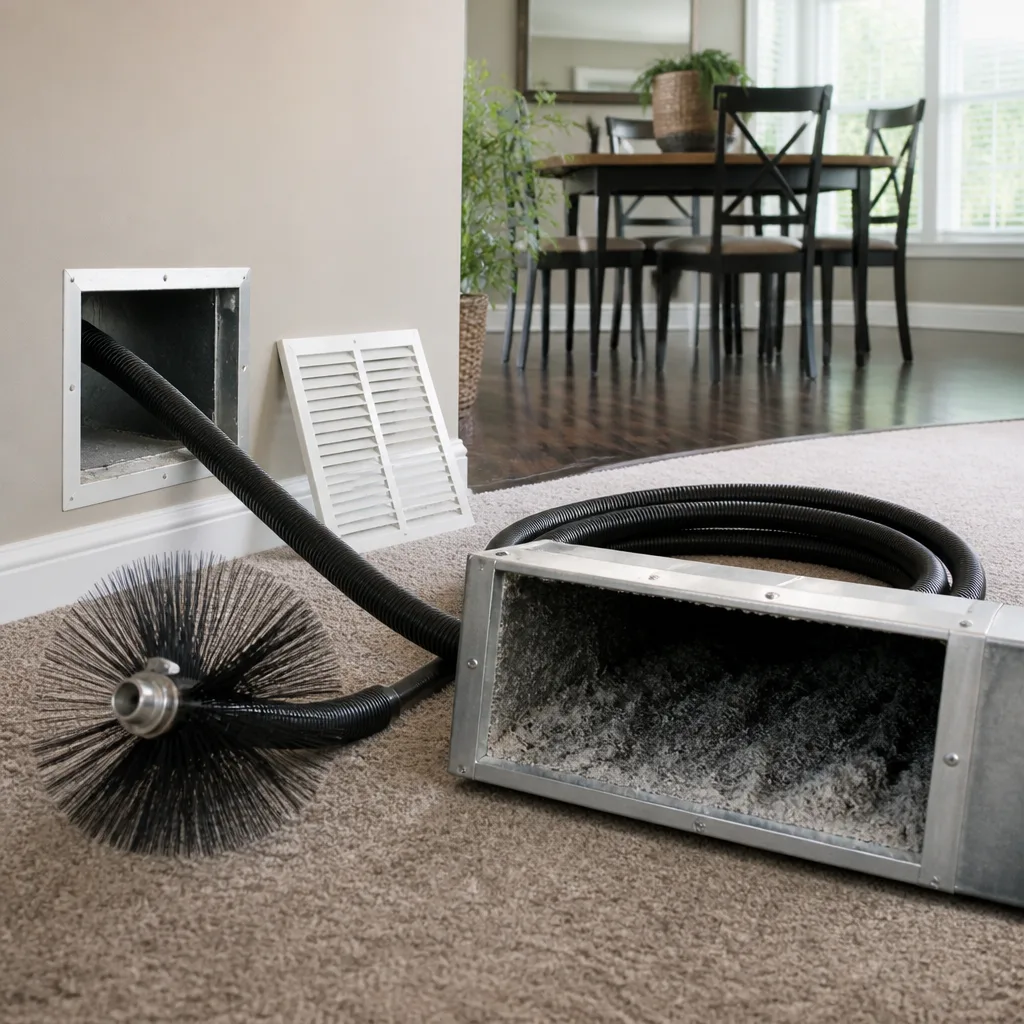
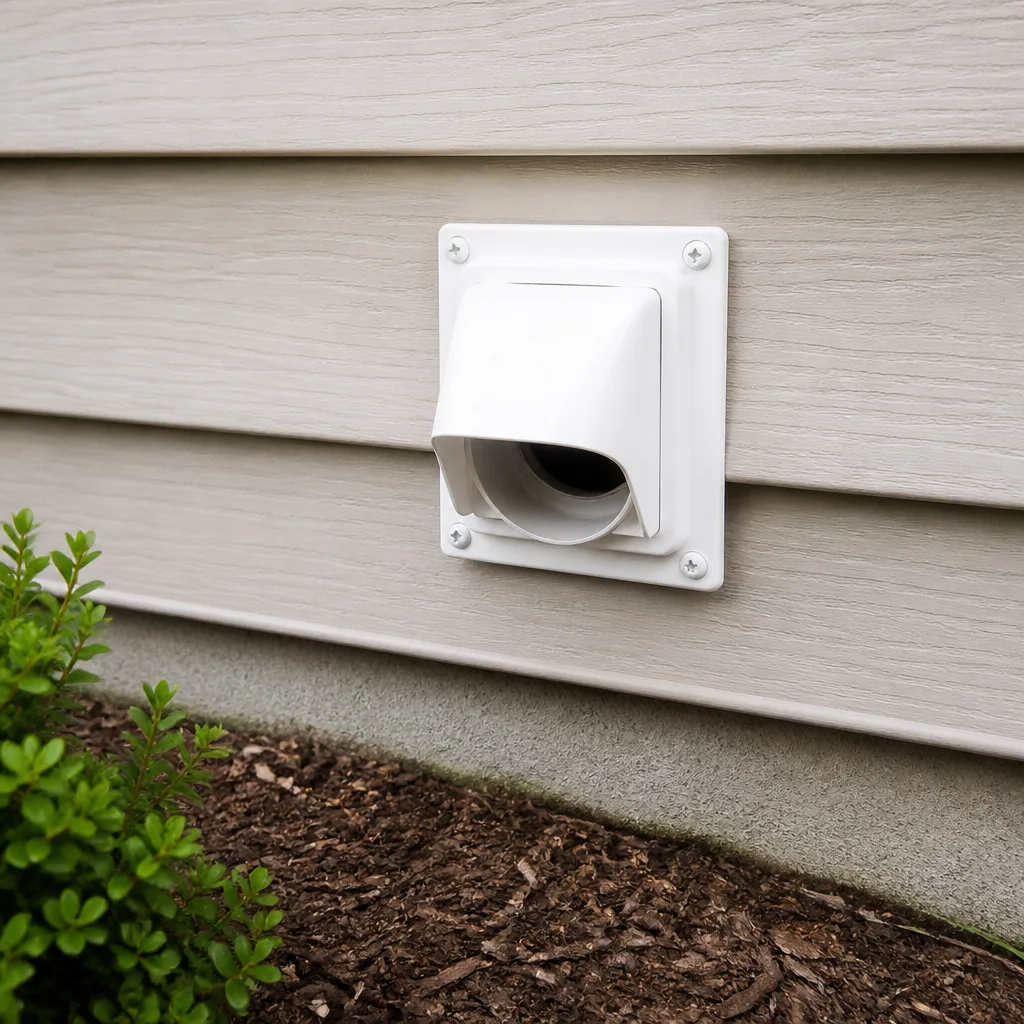 Dryer vent cleaning
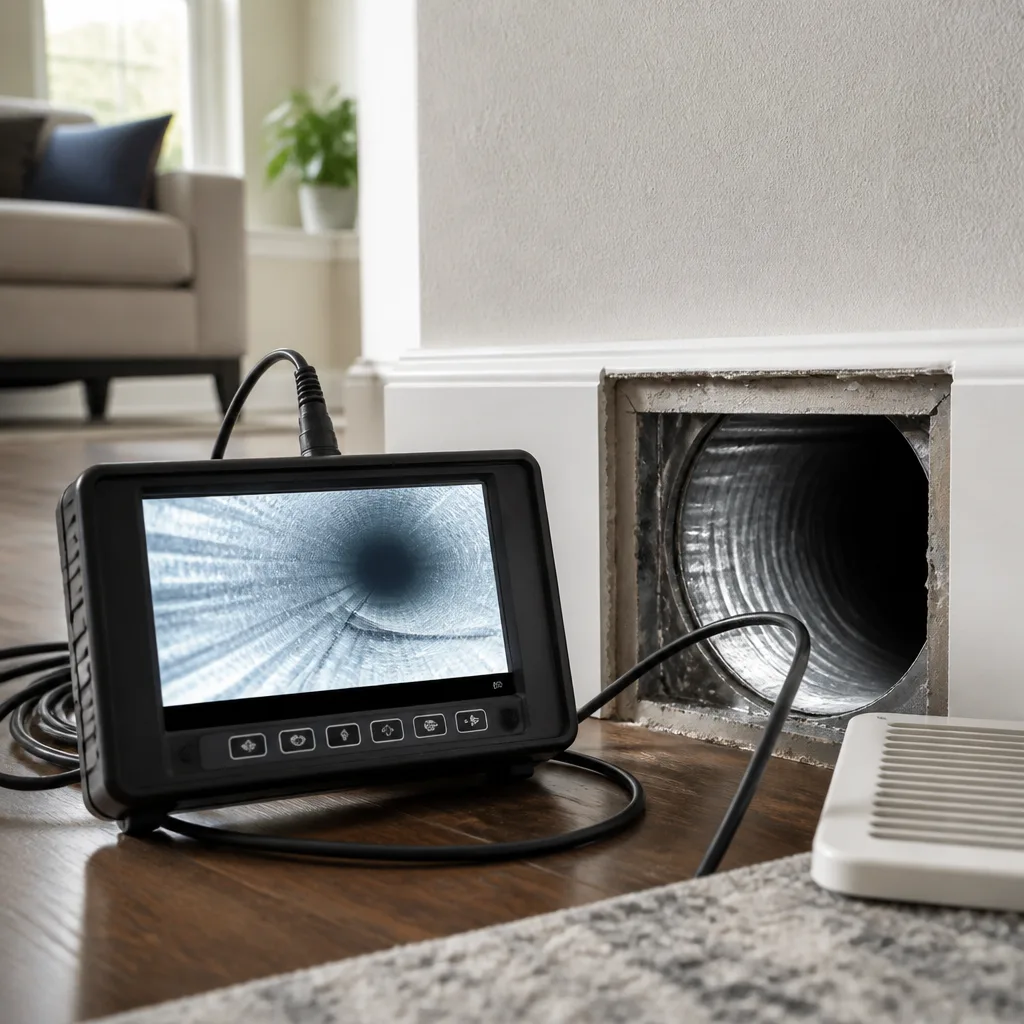 Camera inspection
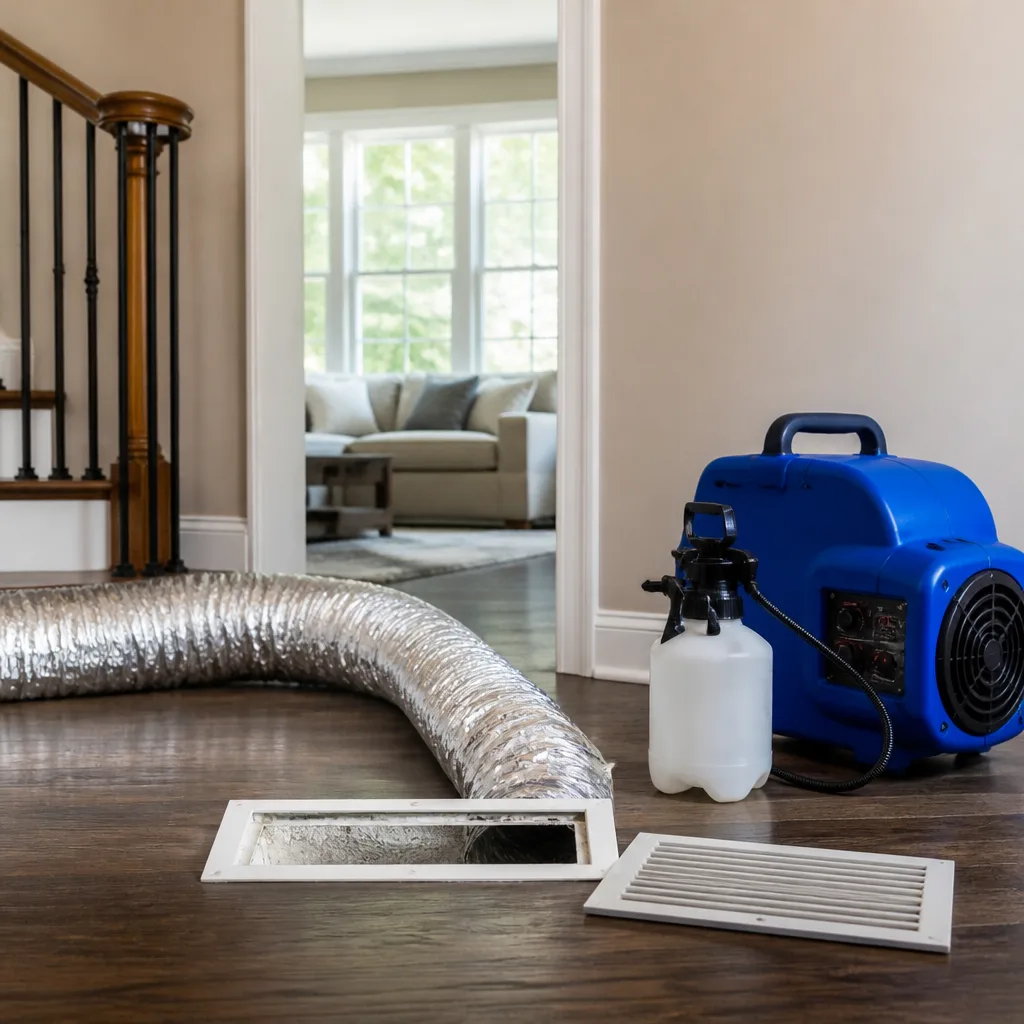 Sanitizing & deodorizing
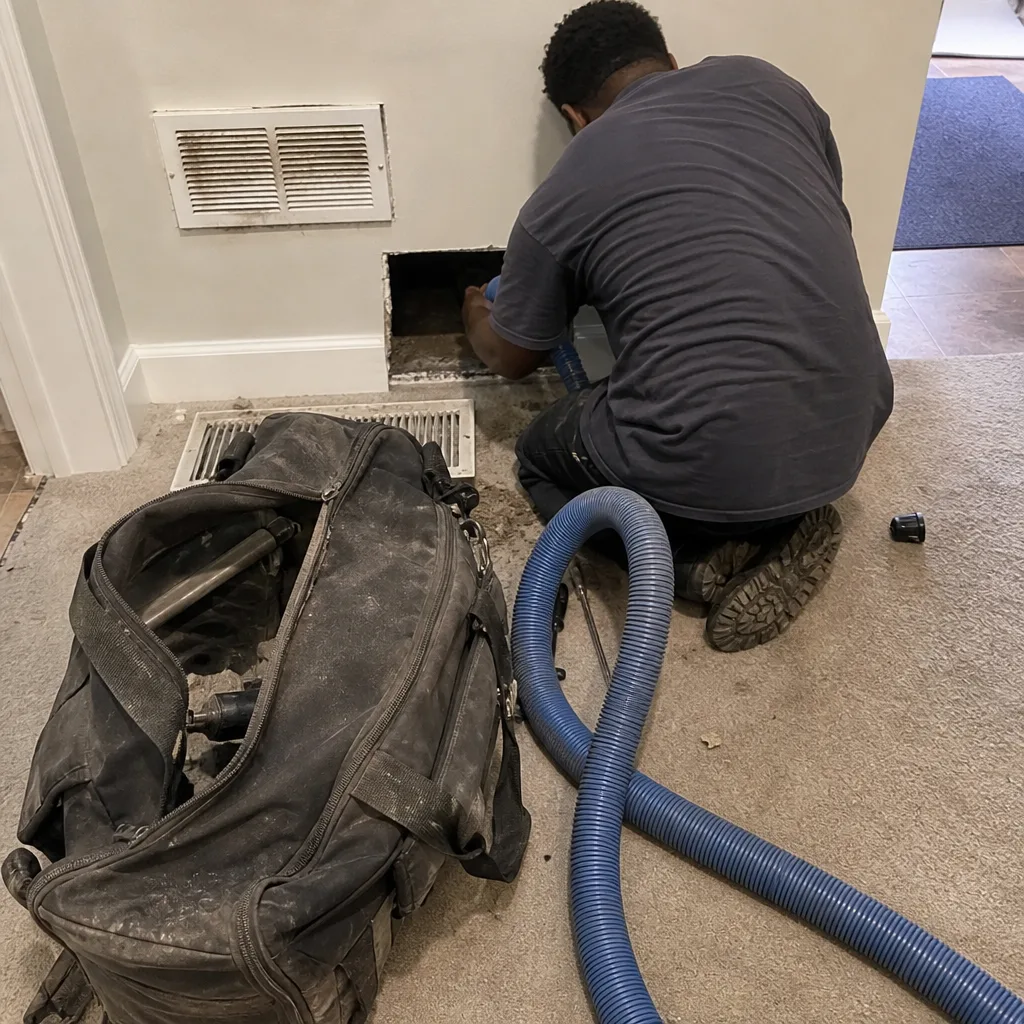
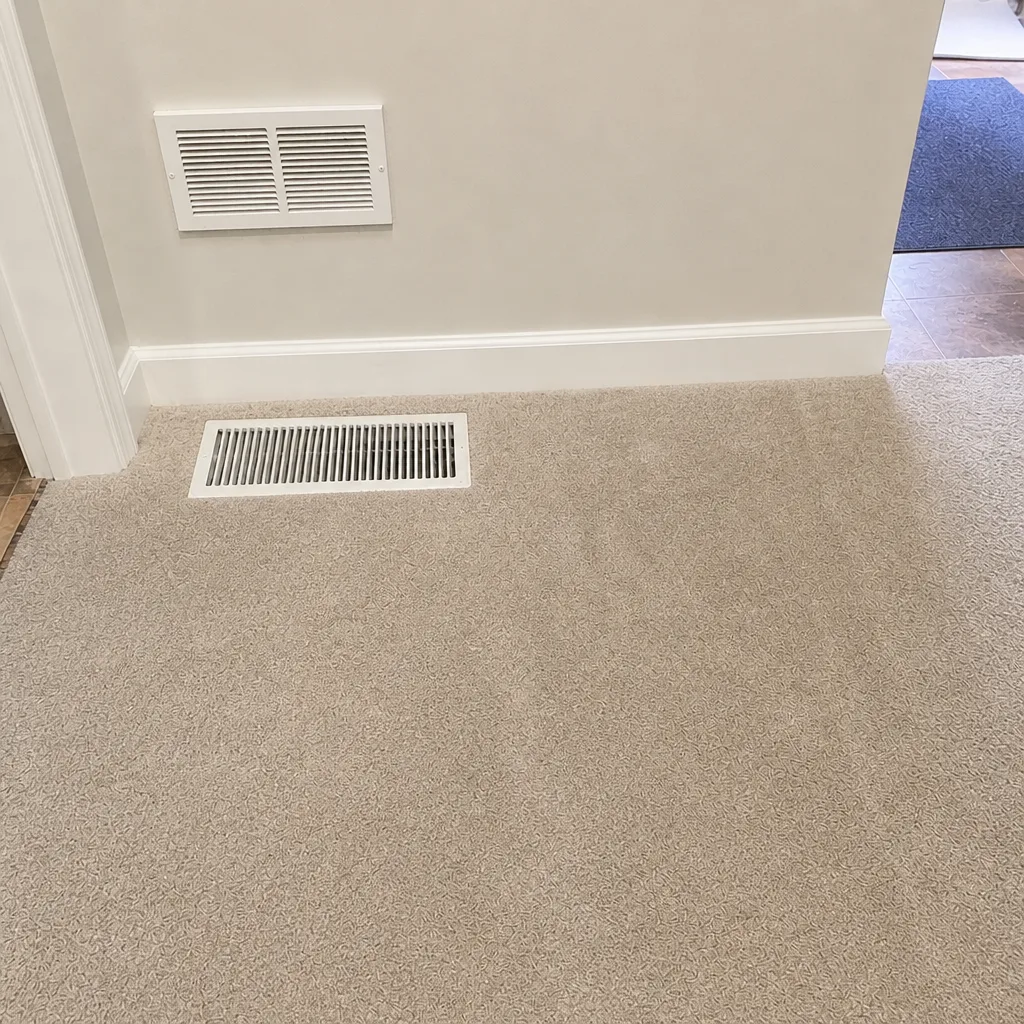
Whole-system duct and dryer vent check with before-and-after photos - you see exactly what came out of your vents
That "$99 whole-house special" is a bait ad - the real number appears once they are in your hallway, or the "clean" is a shop-vac at the register. We photograph the inside of your ducts before and after instead.
Air Duct Cleaning Emergency Preparedness Guide for Richmond Homes
Most Richmond homeowners have a hurricane kit and a plan for the ice storm. Very few have a plan for what happens to their ductwork after the storm passes. That gap matters because the duct system is the one part of a house that keeps circulating whatever got into it, long after the water is pumped out and the trees are cleared. Smoke from a wildfire hundred of miles away, floodwater in a crawl space, or a week of humid idleness after an outage can all leave contamination sitting in the supply runs, and the response window is shorter than people assume. Below, we explain what to do in the critical hours after each type of event, which conditions you can schedule and which you can’t, and how insurance documentation works in Richmond.
Quick Answer
After a flood, fire, or extended power outage in Richmond, the duct system needs inspection within 48 hours if water contacted it or smoke infiltrated the return side. Flood contact with crawl space ductwork is a contamination event that gets harder and more expensive to fix with every humid day. Smoke infiltration often requires more than standard cleaning, including filtration and odor treatment at the source. Call a duct specialist to assess the system before you run the HVAC again.
Styles & brands we work with
- Whole-home duct cleaning
- Dryer vent cleaning
- Camera inspection
- Sanitizing & deodorizing
Table of Contents
- Why Richmond Homes Face Specific Duct Emergencies
- Flooding and the First 48 Hours: What to Do With Wet Ductwork
- Wildfire Smoke Infiltration: Why Standard Cleaning May Not Be Enough
- Post-Ice-Storm Protocol: Idle HVAC Systems in Humid Conditions
- What Homeowner’s Insurance Covers and What Documentation You Need
- How to Triage: Which Conditions Can Wait and Which Can’t
- Building a Duct Emergency Kit Before the Next Event
- Common Mistakes to Avoid
Why Richmond Homes Face Specific Duct Emergencies
Richmond sits in a climate band that produces two opposite problems in the same year: hot, humid summers and winter storms that knock out power for days. Add the city’s older housing stock, much of it with crawl space ductwork, and you get a duct system that is exposed to conditions most modern construction never sees.
The James River floodplain and low-lying neighborhoods near it are the obvious flood risk. But the real issue is smaller and more common: heavy rainfall that overwhelms drainage and pushes water into crawl spaces. When supply runs are suspended a foot off a wet floor, they don’t have to be submerged to be affected. High humidity alone, over days, can wet fiberglass liner and start biological growth on interior surfaces.
On the other side of the calendar, the region gets wildfire smoke from fires well outside Virginia. Smoke doesn’t need a nearby fire to reach Richmond. Prevailing air patterns carry it in, and a house running its HVAC on a normal schedule pulls that smoke directly into the return ducts and distributes fine particulate through the supply side. That’s the part most people miss: the duct system becomes the delivery mechanism.
Ice storms add a third scenario. When the power goes out and the HVAC sits idle for several days in a humid, closed-up house, coil surfaces stay wet and duct liner holds moisture. If you’ve ever turned the system back on and noticed a musty smell, you’ve seen the early stage of this problem. In our experience working across Richmond, these three events, flood, smoke, and outage, account for most post-disaster duct calls we see.
Flooding and the First 48 Hours: What to Do With Wet Ductwork
If floodwater or heavy seepage has contacted your crawl space ductwork, the first 48 hours decide what kind of job this becomes. Wet fiberglass liner and wet metal transitions are prime surfaces for mold colonization, and once it takes hold you’re dealing with remediation scope rather than cleaning scope.
Here’s what to do, in order:
- Stop running the HVAC. Don’t let the system pull humid crawl space air and distribute it through the house. Turn it off at the thermostat.
- Document everything before you touch it. Photograph the water line on ductwork, the crawl space floor, and any visible debris. Note the date and time. This becomes insurance evidence.
- Start drying the crawl space. Fans and dehumidifiers on the floor, not the ducts. The faster the space dries, the slower any biological growth will go.
- Inspect, don’t clean. A visual check of accessible duct sections tells you whether water made contact. If you can see staining, liner separation, or standing water in a low run, that’s a contamination event.
- Call for a professional assessment. Real assessment means looking inside the duct, not just at the outside, using negative-air equipment and HEPA filtration that keeps contaminants contained while the inspection happens.
The reason this matters so much: mold on duct surfaces isn’t visible from the register. By the time a homeowner notices a smell or an allergy flare-up, weeks have passed. The 48-hour window is when drying and cleaning solve the problem. After that, you may be looking at duct cleaning plus repair or partial replacement of liner. If water has been in the ducts for days, don’t run the system. Have it assessed first.
Wildfire Smoke Infiltration: Why Standard Cleaning May Not Be Enough
Wildfire smoke isn’t dust with an attitude. It’s a mixture of fine particulate and volatile organic compounds that behave differently from everyday household debris. Standard duct cleaning, done with a rotating brush and a vacuum, removes surface dirt and dust. It does not always remove the absorbed odor compounds that have settled into liner and insulation.
That’s the gap. A house that sat in smoke for a week can come out of a routine cleaning still smelling like a campfire, because the volatile compounds are in the material, not just on it.
What a serious smoke response involves:
- Diagnostic inspection first. Identifying which runs took the heaviest smoke load (usually returns and the closest supply branches) before any cleaning starts.
- Negative-air containment. Filtration equipment that keeps dislodged particulate out of the living space while work is done. This is the same approach used in environmental remediation, and it’s the difference between cleaning a duct and cleaning the air around it.
- Source-level cleaning, not surface pass. Rotobrush and Nikro systems agitate and extract the full interior surface of the duct, not just what a hose can reach.
- Odor treatment at the source. If smoke compounds have been absorbed, cleaning removes the material but the smell may need a separate treatment step. Some systems also benefit from activated carbon filtration during the recovery period.
Because smoke exposure is cumulative and often partial, the right way to handle it is assessment first, then a scope based on what the assessment finds. air duct cleaning after a smoke event is a different job than routine maintenance. Treat it that way.
Post-Ice-Storm Protocol: Idle HVAC Systems in Humid Conditions
Ice storms don’t touch your ducts directly. What they do is stop the HVAC system for days at a time while the house stays closed up and humid. That idle period is what causes damage.
Two things happen. First, the coil surfaces that were last used stay wet. Without airflow and without a running system to carry moisture away, they can develop biological growth. Second, the duct liner, especially fiberglass, absorbs humidity from the crawl space or attic. If the lining stays damp for several days, it starts to degrade.
When power comes back, the wrong approach is to crank the system and hope. The right approach:
- Inspect the air handler and coil area before restarting. Look for standing water, condensation, or visible growth on the coil. If you see any of it, have it looked at before you run the system.
- Check for liner moisture. In the accessible duct sections, look for sagging, discoloration, or dampness. Wet liner is often the first visible sign.
- Run the system and watch for smell. A light musty smell at startup that clears in an hour is usually minor. A smell that persists or intensifies is a sign the liner or coil needs attention.
- Schedule cleaning if it was idle for more than about three days in humid weather. A duct system that’s been off for several humid days is a candidate for a post-outage inspection.
One more thing worth adding to the kit: guardsman-grade cleaning standards applied to duct surfaces mean the work accounts for what’s actually on the lining, not just the debris count. If the liner is compromised, duct repair is the correct next step. We handle Rutherford Air Duct Cleaning assessments with that in mind, because a fix that only cleans without addressing the surface is a temporary result.
What Homeowner’s Insurance Covers and What Documentation You Need
If a declared disaster event caused water or smoke damage that reached your ductwork, the ducts fall under the same coverage as the rest of the damaged structure in most standard policies. That’s the general rule. What varies is what you can actually claim without documentation, and that’s where most homeowners lose money.
Documentation you’ll want:
- Before photos. The water line on ductwork, the crawl space floor, the visible smoke staining, the notification date from the storm.
- System details. The age of the duct system, the material type, and a written assessment from a specialist. An assessment that identifies which components are damaged and which are clean is far harder for an adjuster to reduce.
- Scope of work. A written scope that distinguishes between cleaning, repair, and replacement. If a policy covers cleaning but not replacement, the assessment needs to be clear on which is needed and why.
- The date of the event and the date you noticed damage. If the duct problem showed up weeks after the storm, that gap needs to be explained. Post-storm duct damage is often not immediately visible, and adjusters understand this when you frame the timeline correctly.
We can work with your insurer to provide an assessment and scope of work that supports a claim. What a policy covers is a question for your carrier, but the documentation you hand them is your best tool for getting the right outcome. If the claim happens, don’t wait for the timeline to expire before getting a professional assessment on paper.
How to Triage: Which Conditions Can Wait and Which Can’t
Not every duct issue after an emergency is urgent. Some conditions can sit for a scheduled appointment. Others get worse every day and should be addressed immediately. Here’s how we triage them:
- Emergency (assess within days): Standing water in or around ductwork. Visible mold on accessible duct surfaces. Smoke infiltration severe enough to cause breathing difficulty for anyone in the home. Duct damage that’s causing a system to lose airflow entirely. The longer these sit, the more the repair scope grows.
- Schedule soon (within a couple of weeks): Post-storm humidity in a crawl space that hasn’t visibly reached the ducts but has been closed up for days. Noticeable musty smell after a power outage. Visible debris or light staining. These need an assessment, but the clock is slower.
- Can wait for routine service: Minor dust accumulation. A smoky smell that’s fading after the system has been running. General cleanliness concerns unrelated to an event. If it’s not event-driven, treat it as routine maintenance.
One call we get after almost every major storm: someone who notices a smell weeks later and can’t figure out why. The duct system is one of the last places people look. If a house has been through a flood, a smoke event, or a long outage and something feels off about the air, get an assessment instead of guessing. We answer 24/7, with fast dispatch from 7am to 7pm, Sunday through Friday.
Building a Duct Emergency Kit Before the Next Event
Preparation is the cheapest insurance. Here’s what we recommend every Richmond homeowner keeps ready before the next storm season:
- A flashlight that isn’t the phone. You’ll need one for the crawl space at 3am.
- Two box fans and a dehumidifier. Enough to dry a crawl space fast if water gets in.
- A copy of your homeowner’s policy, with the water and smoke coverage sections flagged. You’ll need to know what’s covered before you file.
- A contact list with a duct specialist, an HVAC company, and a water mitigation company. Post-storm, the good ones get booked fast.
- A dark cloth and a plastic bag. For checking duct liner color and temporarily covering registers when contaminants are present.
- A dozen dated photographs of your duct system in normal condition. This is your baseline for insurance claims. The adjuster’s best comparison is what the system looked like before the damage.
The kit doesn’t need to be elaborate. What it needs to be is accessible, because in the first 48 hours after an event, the last thing you want is to be looking for a flashlight and a fan.
Common Mistakes to Avoid
- Running the HVAC after flood contact. If water touched the crawl space ductwork, running the system distributes humid air and whatever’s growing in it through every room. Shut it off first, assess second.
- Cleaning before inspecting. A thorough assessment identifies which ducts are affected and what kind of work is needed. Skipping that step means the cleaning might miss the actual problem, or waste a scope on ducts that didn’t need it.
- Assuming the ducts are fine because the house looks fine. Most post-storm duct contamination is invisible from the register. Visible damage at the floor doesn’t confirm the ducts are fine, and a clean floor doesn’t confirm the ducts are fine either.
- Waiting for the musty smell before acting. Smell is a late indicator. By the time you notice it, the growth is already established. Better to assess on the timeline the event dictates than wait for a symptom that arrives weeks late.
- Filing an insurance claim without a written assessment. An adjuster working from a verbal description or a photo set is likely to scope conservatively. A specialist’s written assessment is the document that anchors the claim.
- Using a surface cleaning when the problem is absorbed smoke. A standard brush-and-vacuum pass doesn’t address odor compounds in liner material. If the smoke event was significant, ask about treatment at the source, not just surface cleaning.
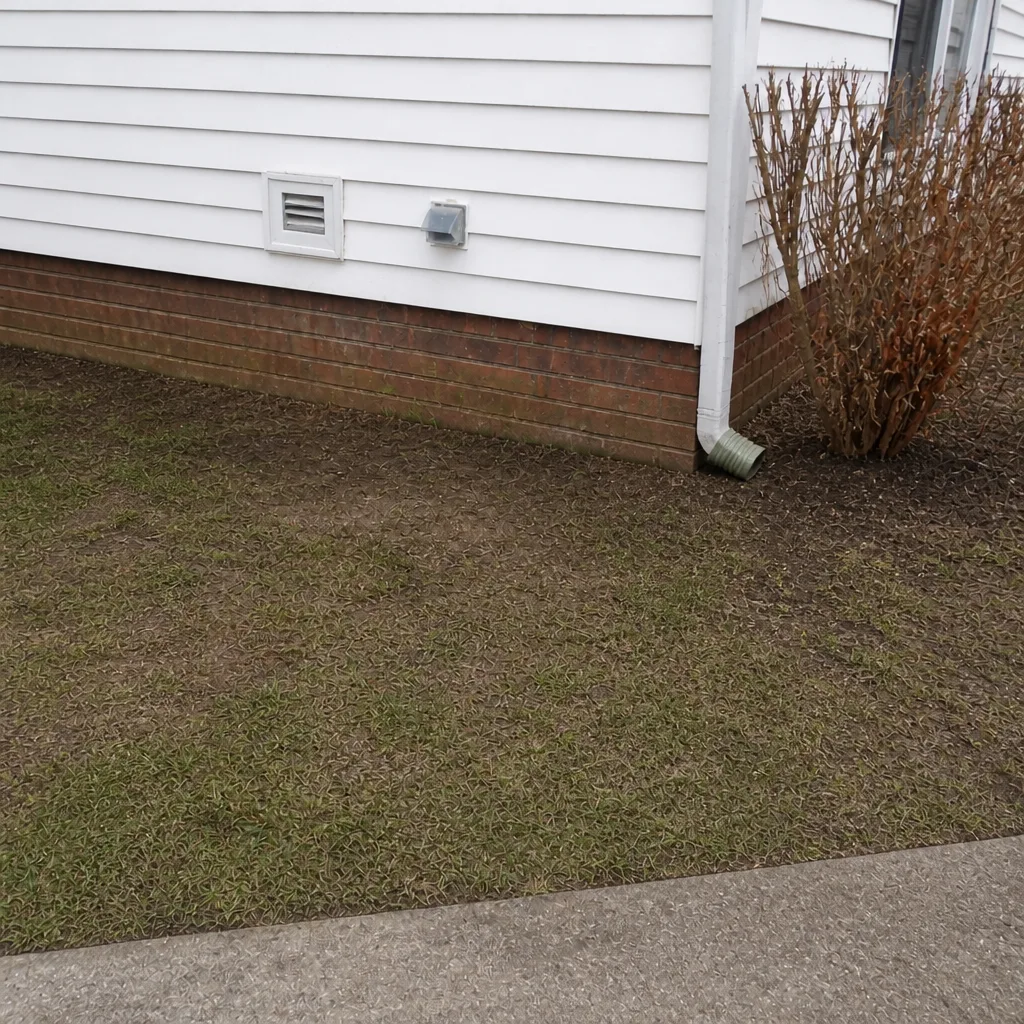
- Waiting for the dryer vent to fail. The same event pattern that disrupts duct systems can leave a dryer vent clogged with lint and moisture. dryer vent cleaning after storms is a fire-safety step many homeowners skip.
See the difference
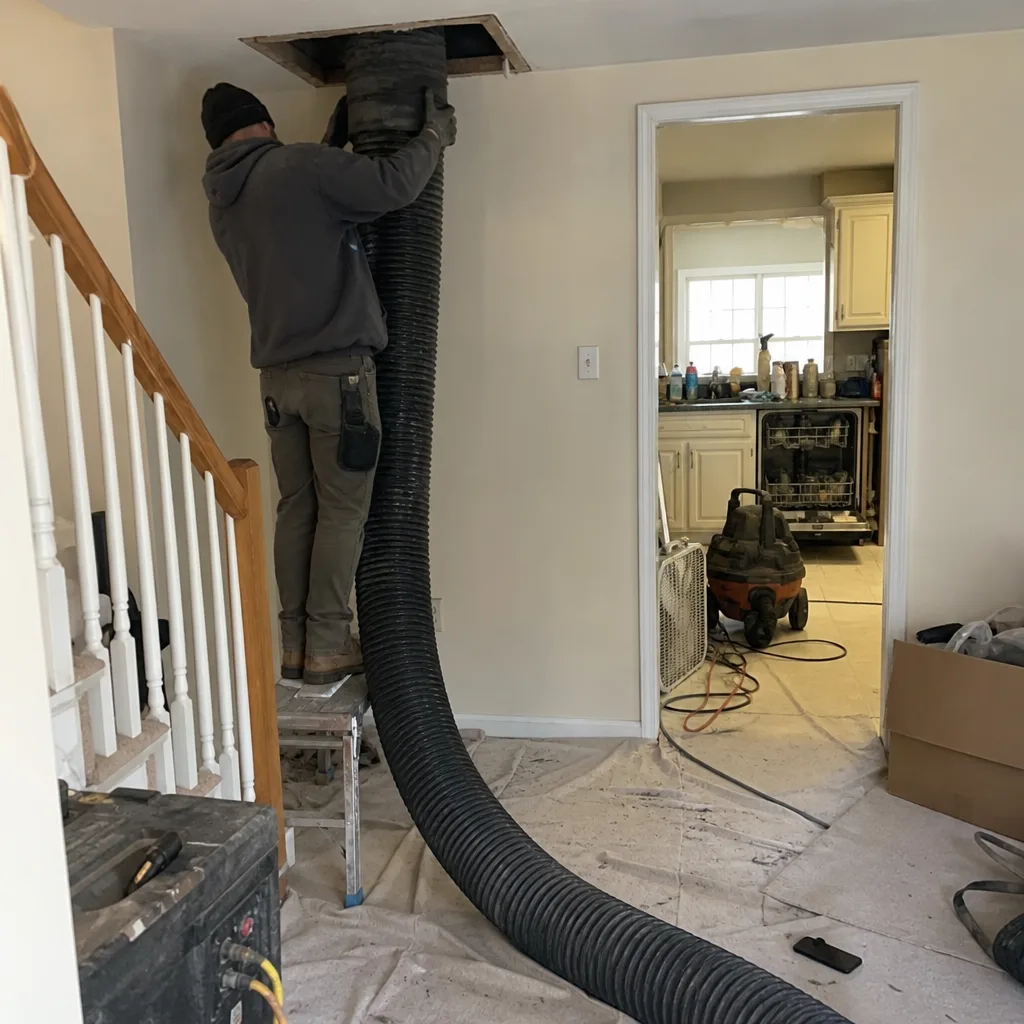 Before
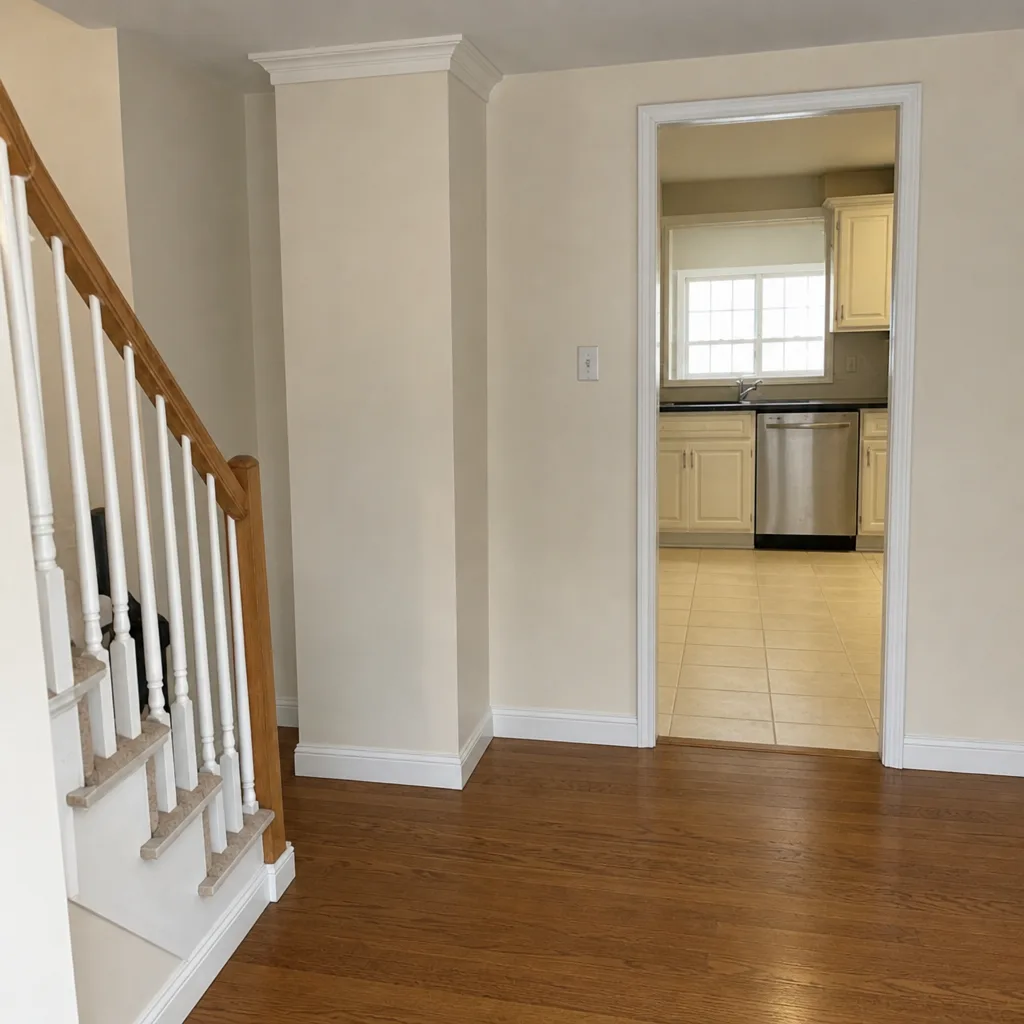 After
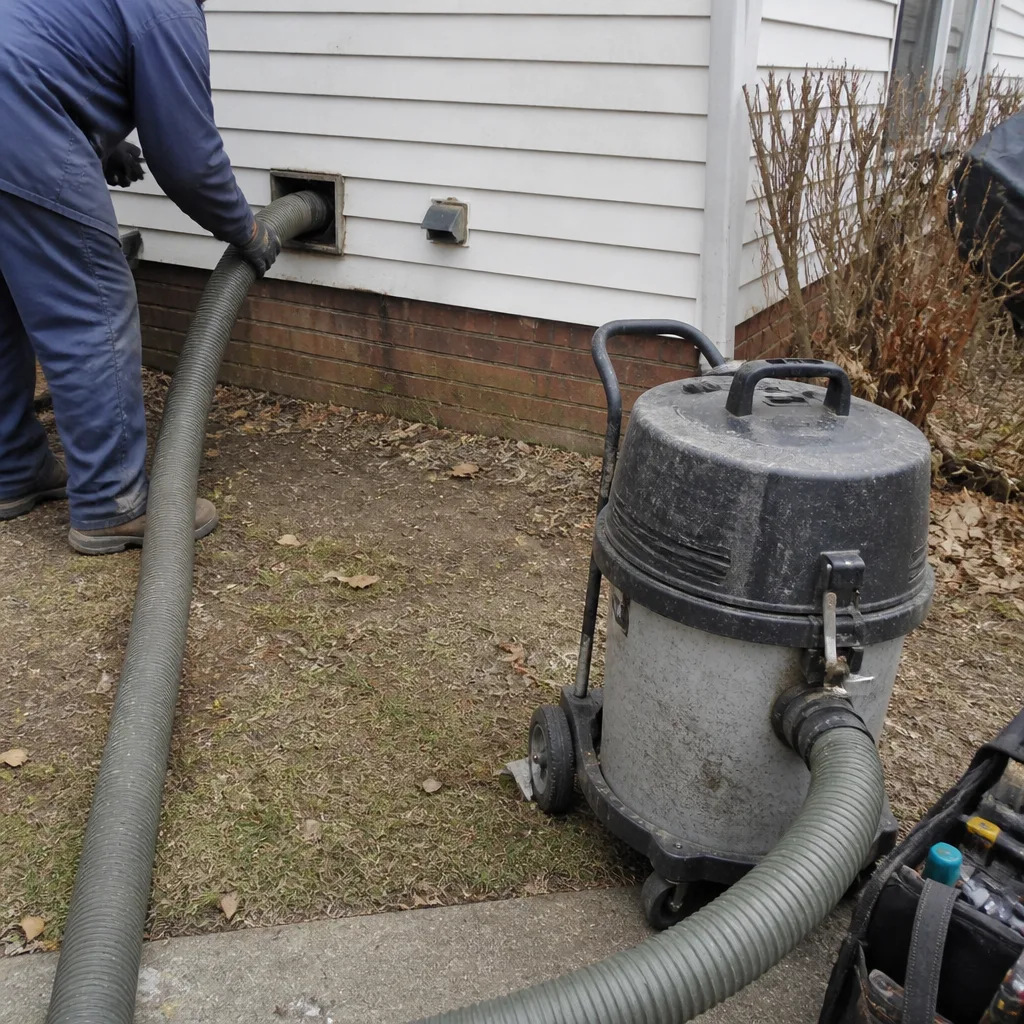 Before
 After
 Before
 After
When to Call a Professional
Call when: floodwater contact the ducts, visible mold in the crawl space or on duct surfaces, a persistent smoky or musty smell after a storm, a power outage of several days during humid weather, or duct damage that’s causing the system to lose airflow. Also call if the duct system hasn’t been serviced in years and you don’t have a baseline. What we don’t recommend is trying to handle contaminated ductwork with consumer tools. Crawl space work, negative-air containment, and inspection of internal duct surfaces are professional jobs, and the wrong approach can spread contamination through the living space. Rutherford Air Duct Cleaning offers free estimates in Richmond. Call (855) 606-6205. We answer 24/7. Fast dispatch from 7am to 7pm, Sunday through Friday, and we can work with your insurer on documentation for post-storm assessments.
Frequently Asked Questions
Within 48 hours if water contacted the ductwork, and don’t run the HVAC in the meantime. The 48-hour window is when drying and cleaning solve the problem. After that, mold colonization can push the job into remediation territory, which is a bigger and more expensive scope. Call (855) 606-6205 for an assessment. We answer 24/7. Fast dispatch from 7am to 7pm, Sunday through Friday.
Yes, if the house was running its HVAC during the smoke event. Wildfire smoke travels hundreds of miles, and a normal HVAC schedule pulls it in through the return ducts. Once smoke particulate and volatile compounds settle in the return and supply runs, they can linger after the air clears. Standard cleaning removes the dust; absorbed odor compounds may need source-level treatment with activated carbon filtration during the recovery period. Call (855) 606-6205 for an assessment.
Check the air handler and coil area first, then run the system and watch for a persistent musty smell. A light odor that clears in an hour is usually minor. A musty smell that doesn’t fade is a sign the liner or coil absorbed moisture during the outage. If the system was off for several humid days, an inspection is worth doing. Call (855) 606-6205 to schedule one.
Ducts usually fall under the same coverage as the rest of the damaged structure when the damage is from a declared event, but what a policy covers is a question for your carrier. The documentation you’ll need is before photos, a written assessment from a specialist, a scope of work that distinguishes cleaning from repair from replacement, and the event date. We can work with your insurer to provide the assessment. Call (855) 606-6205 for a free estimate.
Not safely if the system has flood contact, visible mold, or significant smoke infiltration. Consumer vacuums and brushes don’t provide the negative-air containment that keeps dislodged contaminants out of the living space, and they don’t reach internal duct surfaces. Professional equipment from Rotobrush, Nikro, and Abatement Technologies is designed for this. If the ducts have been in a flood or a severe smoke event, have them assessed before touching them.
Regular cleaning removes dust and surface debris. Post-emergency work starts with an assessment to identify what kind of contamination is present, then scopes the response based on that: containment, filtration, source-level cleaning, odor treatment, or duct repair. It’s a diagnostic approach, not a surface pass. That’s the distinction that matters after a flood, fire, or extended outage. Call (855) 606-6205 for a post-event assessment.
The Bottom Line
Richmond homes face three duct emergencies: flood contact in crawl space systems, wildfire smoke infiltration, and post-outage humidity damage. Each has a narrow response window, and each gets worse with time. The 48-hour rule after flood contact is the most important single takeaway. Smoke needs a source-level approach, not a surface pass. Ice storm outages need a coil and liner inspection before restart. Insurance claims go smoother with a written assessment in hand. If any of these happens, the right first call is a professional assessment, not a cleaning appointment. For dryer vent cleaning and duct work after an event, call (855) 606-6205 for a free estimate.
Written by the team at Rutherford Air Duct Cleaning.