
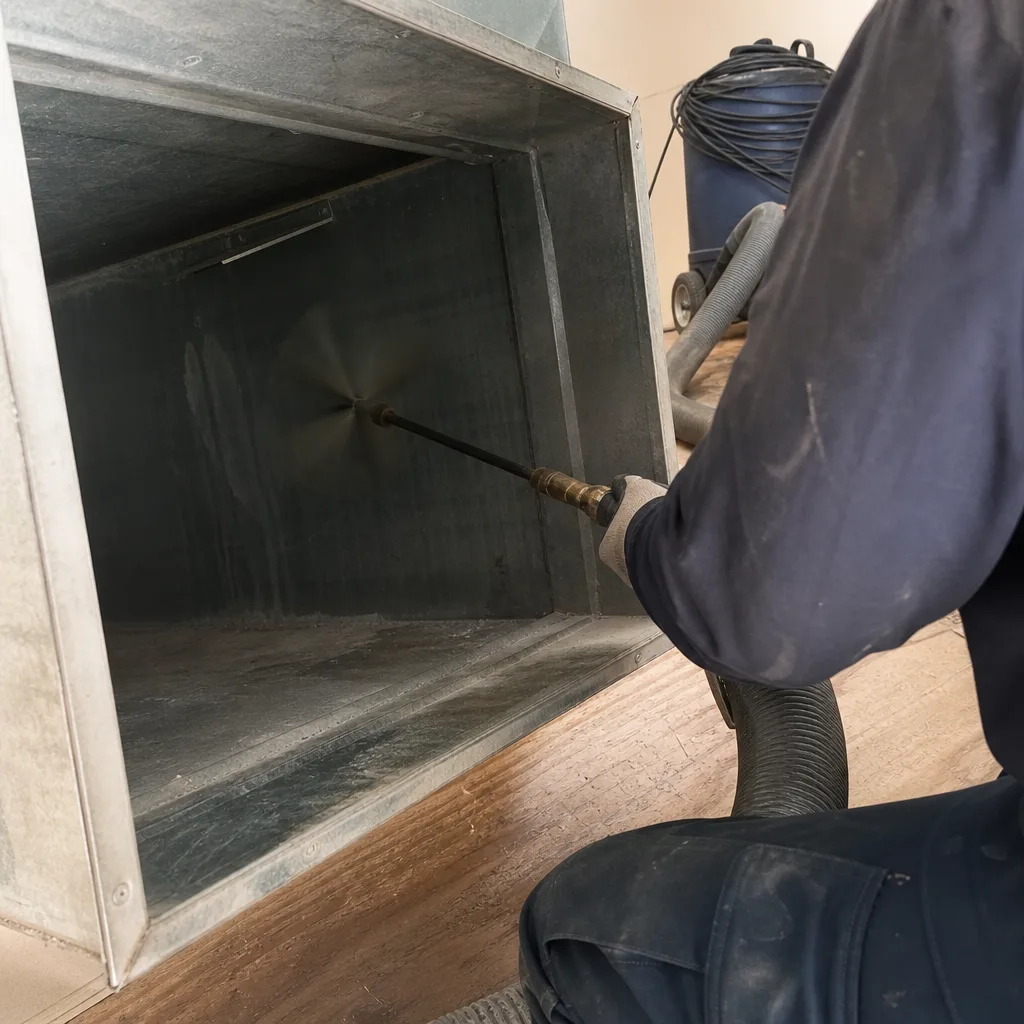
Last updated November 14, 2026
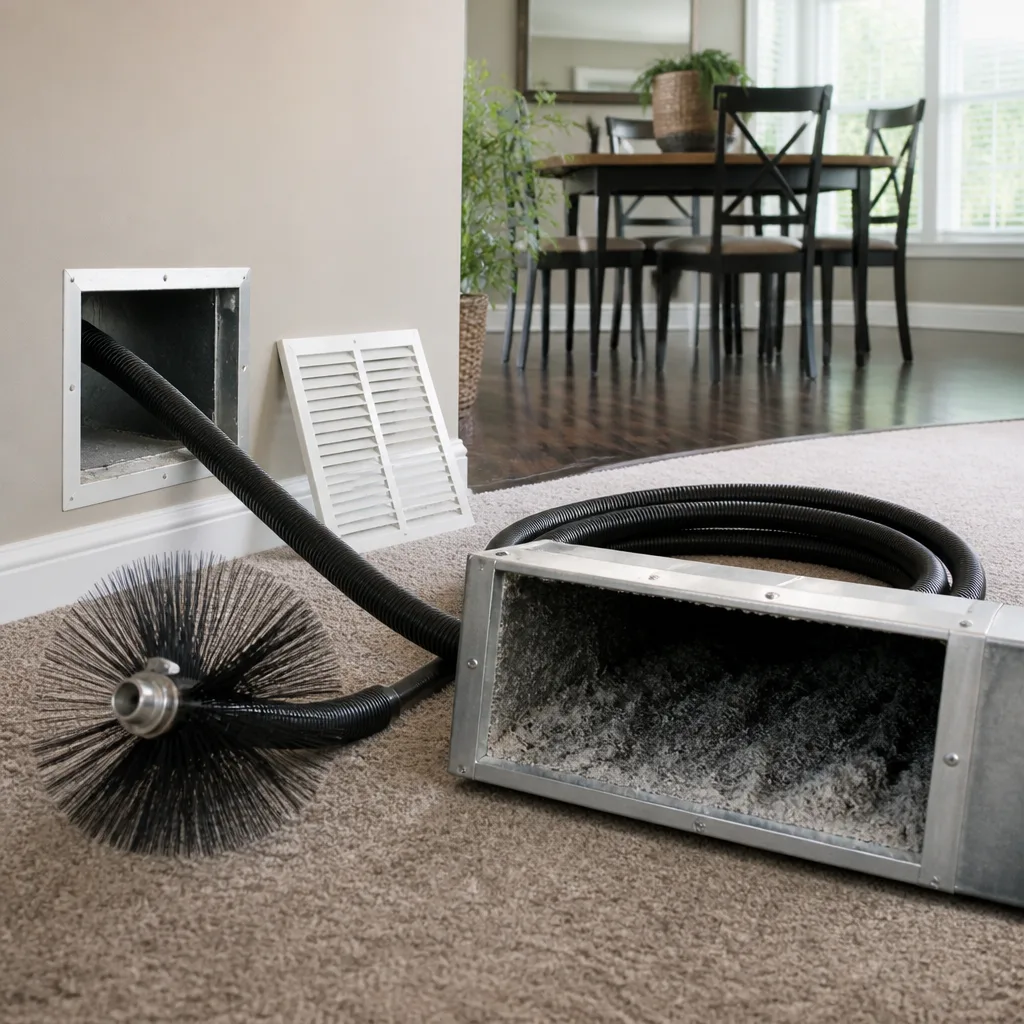 Whole-home duct cleaning
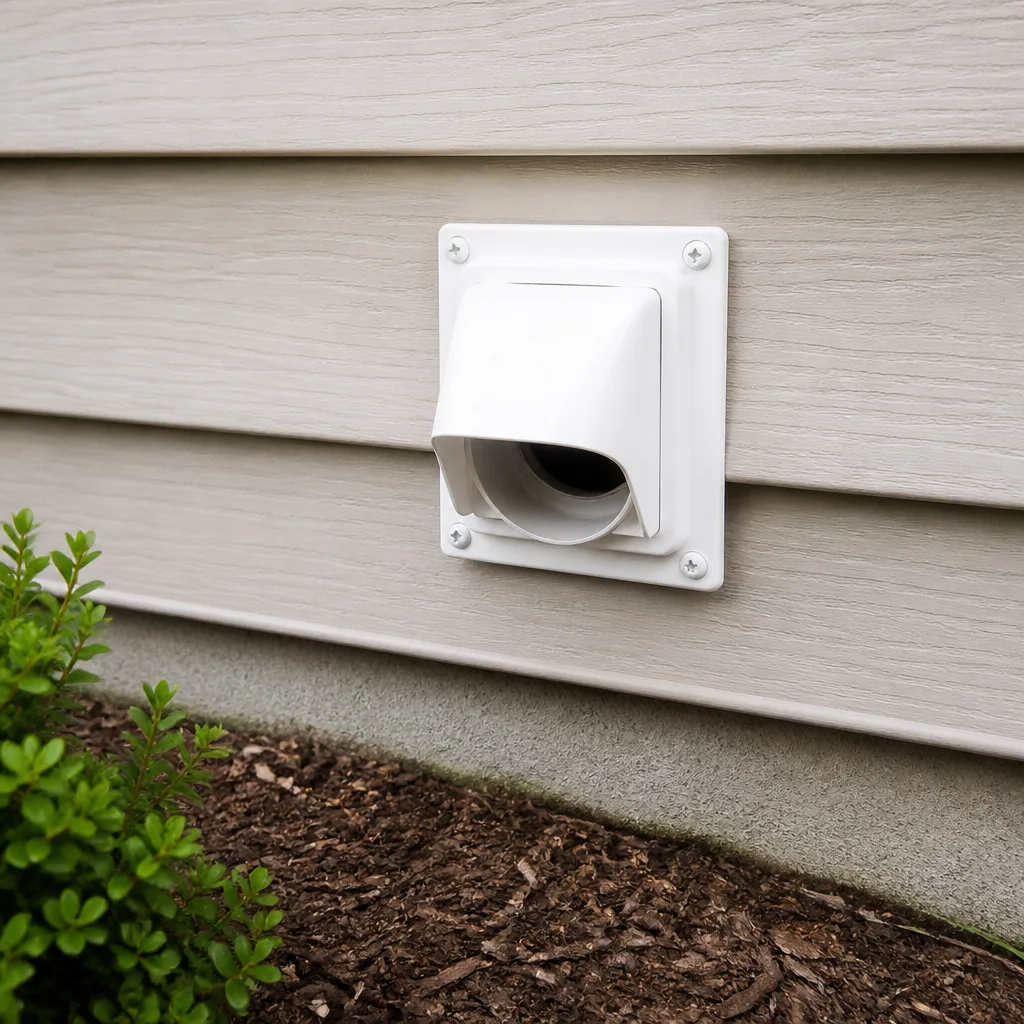 Dryer vent cleaning
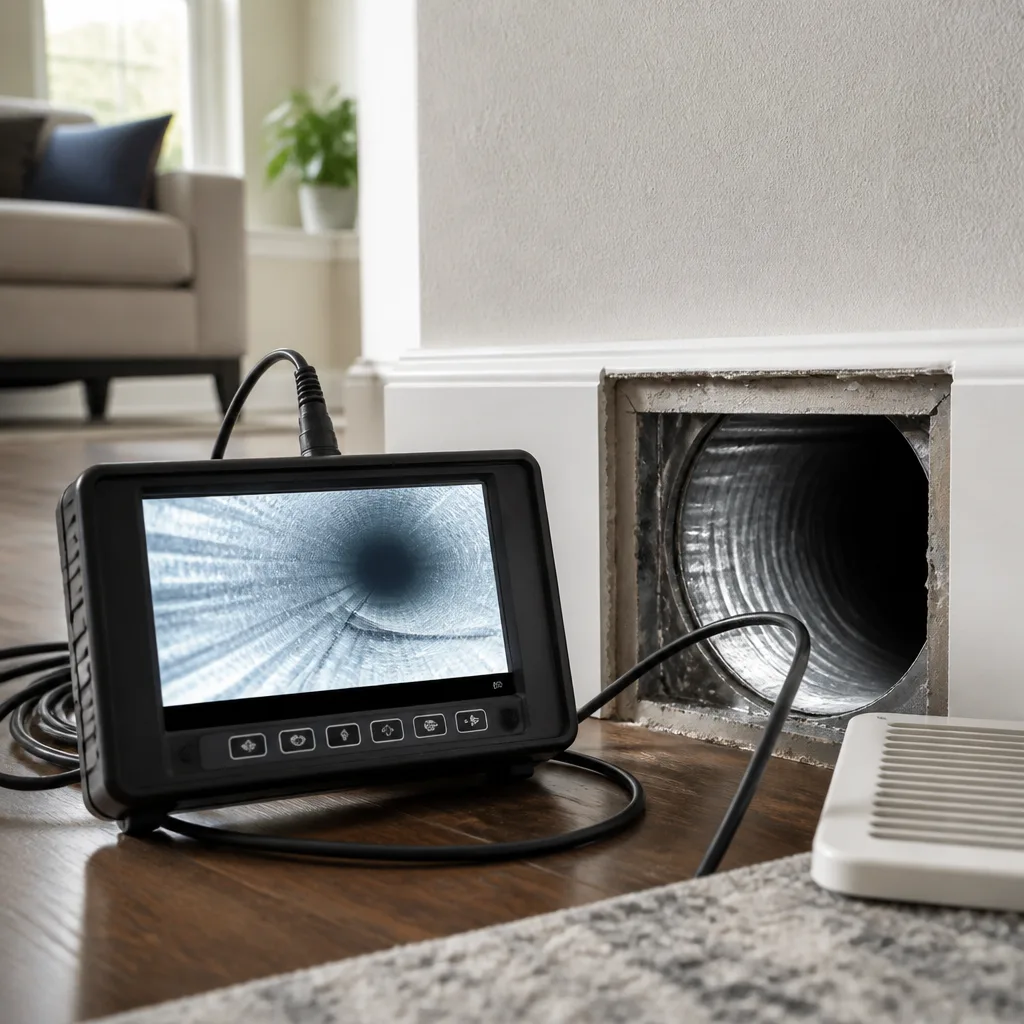 Camera inspection
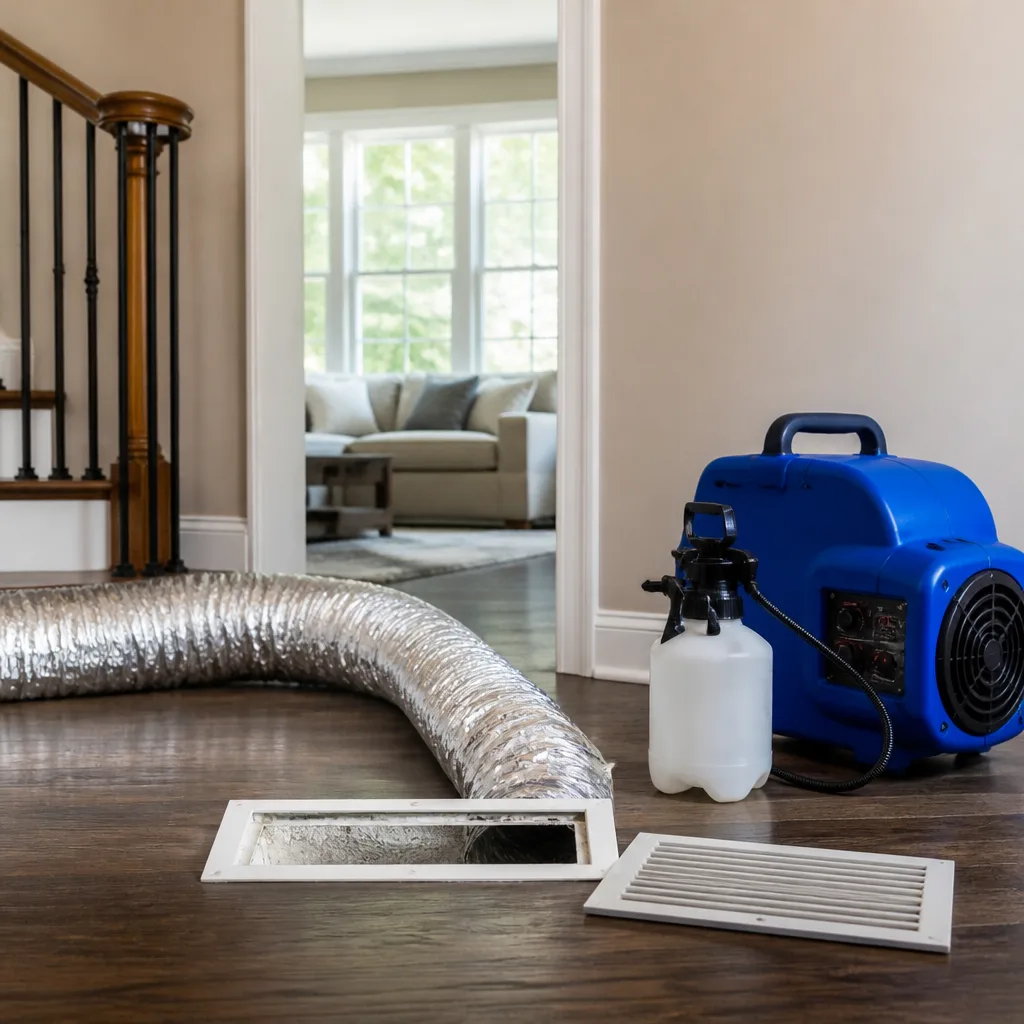 Sanitizing & deodorizing
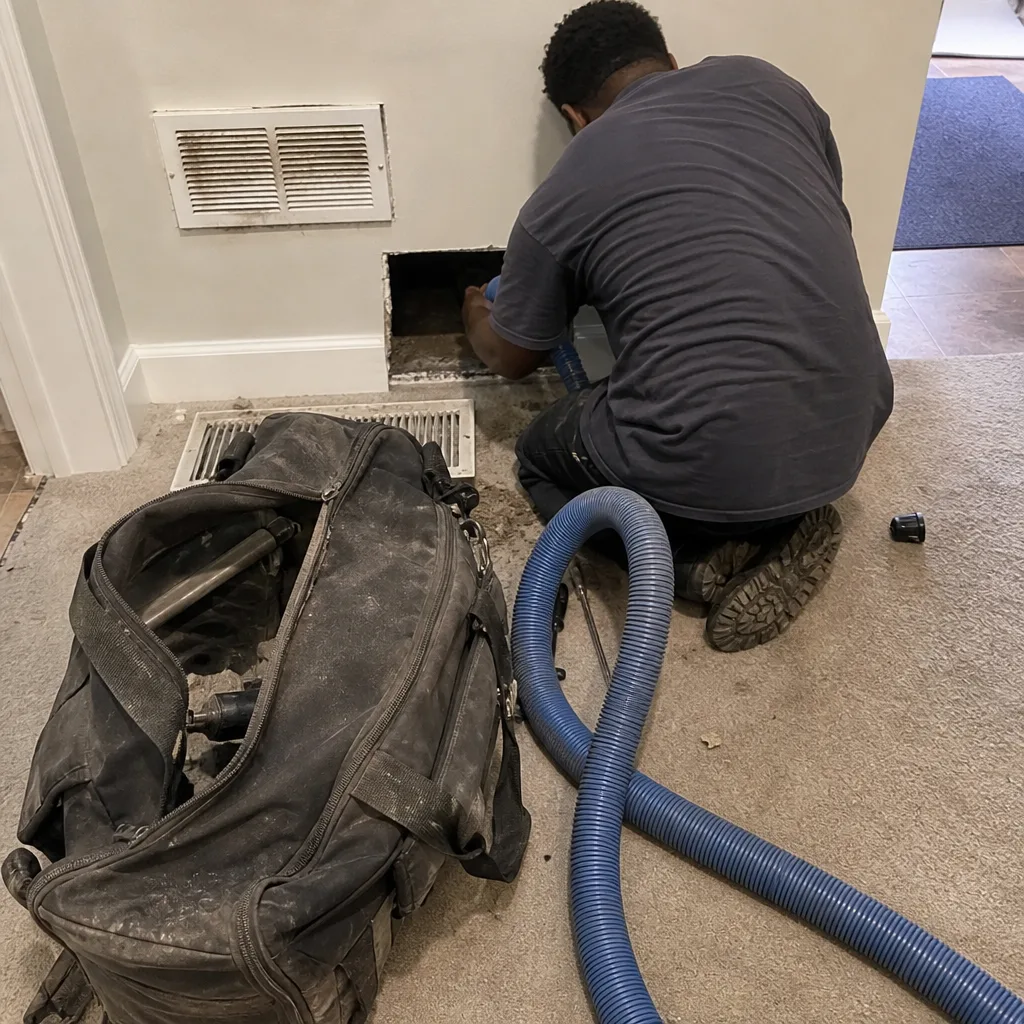
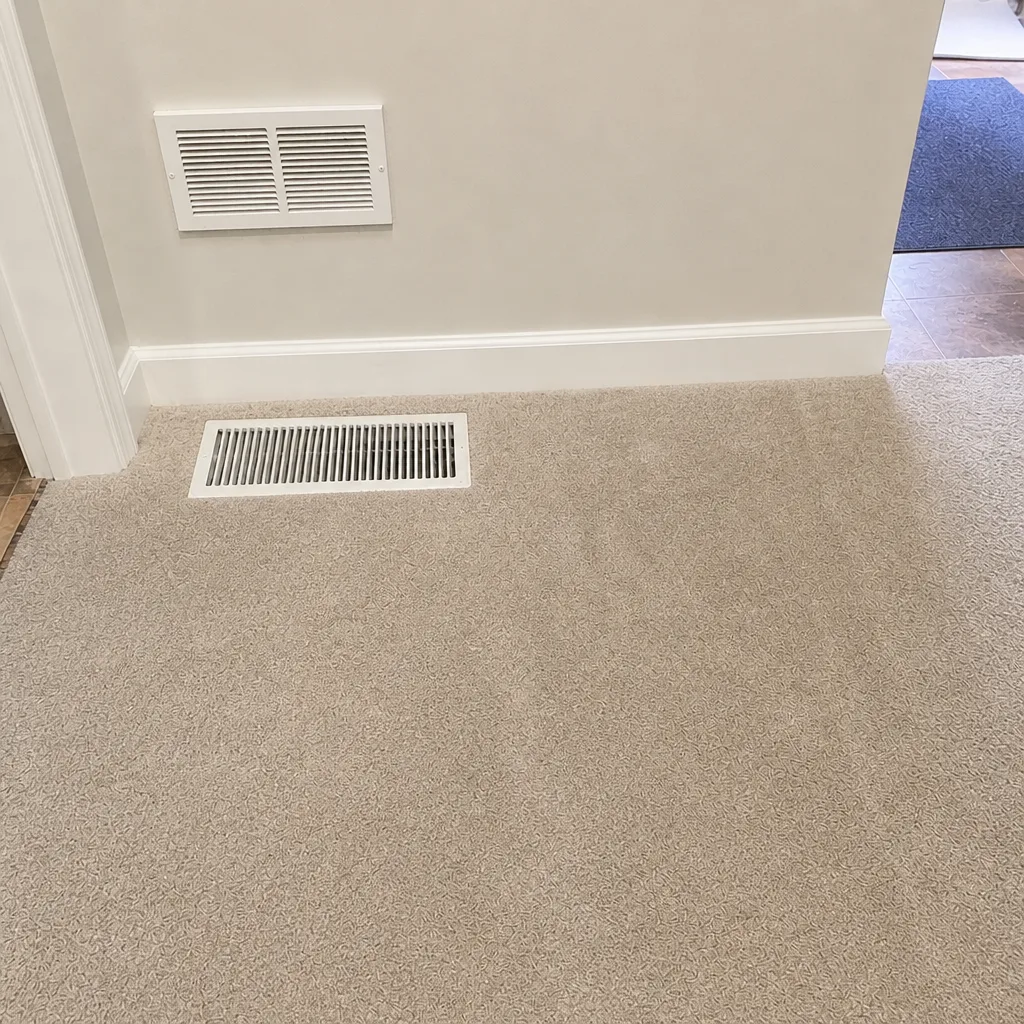
Whole-system duct and dryer vent check with before-and-after photos - you see exactly what came out of your vents
That "$99 whole-house special" is a bait ad - the real number appears once they are in your hallway, or the "clean" is a shop-vac at the register. We photograph the inside of your ducts before and after instead.
Air Duct Cleaning Maintenance Schedule: What to Do and When
The “3 to 5 year” cleaning interval you’ve seen repeated on nearly every HVAC site was never an engineering standard. It’s a rough industry average, and averages ignore the things that actually determine how fast your ducts collect debris: how many people live in the house, whether you have pets, what your ductwork is made of, and whether you’ve recently torn out a wall. A single adult in a tight sheet-metal system and a family of five with two dogs in a renovated ranch house should not be on the same schedule. In this guide, we’ll walk through the variables that shift a cleaning interval, what Richmond’s humidity does to duct interiors, and how to track your system’s actual condition so you clean based on evidence instead of a calendar someone else printed.
Styles & brands we work with
- Whole-home duct cleaning
- Dryer vent cleaning
- Camera inspection
- Sanitizing & deodorizing
Quick Answer
There is no universal air duct cleaning schedule. Most Richmond homes need professional cleaning every 3 to 5 years, but that range can compress to every 2 years in high-occupancy or pet-heavy households with flex duct, or stretch to 7 or more years in low-occupancy homes with sealed sheet-metal systems. The right interval is set by your home’s contamination rate, which you can estimate from occupancy, pets, duct material, renovation history, and what you see at the registers.
Table of Contents
- Why the Standard 3-to-5-Year Rule Falls Short
- The Variables That Set Your Real Cleaning Interval
- How Richmond Humidity Changes the Equation
- Duct Material: Flex, Sheet Metal, and What Each One Does
- What to Do Between Professional Cleanings
- Post-Event Triggers That Override Any Calendar
- How to Track Duct Condition Over Time
- When to Call a Professional
Why the Standard 3-to-5-Year Rule Falls Short
The 3-to-5-year figure gets repeated because it’s easy to remember, not because anyone validated it against real homes. It shows up in consumer articles, gets copied, and eventually takes on the weight of a rule. What it actually represents is a middle-of-the-distribution estimate that assumes an average house, average occupancy, average ductwork, and average climate. Richmond homes are rarely average across all four.
Here’s what the rule misses. Contamination in ductwork builds at a rate, not on a timer. That rate is the product of how much particulate enters the system, how well the filter catches it, how much moisture is present, and how rough the interior surfaces are. Change any one of those inputs and the interval moves.
We’ve seen homes in the Fan District where the ducts were genuinely loaded at the two-year mark because the house had been gutted and rebuilt. We’ve also seen suburban homes in short-pump where the system was still reasonably clean at year seven because the homeowners ran a good filter, kept the house sealed, and had no pets.
What this means practically: treat 3 to 5 years as a starting bracket, not a prescription. The rest of this guide is about moving your own number up or down from that bracket.
The Variables That Set Your Real Cleaning Interval
Five factors do most of the work in determining how fast a duct system collects debris. Score your home against each one and you’ll land on a more useful interval than any generic rule gives you.
1. Occupancy density
Every person in a house sheds skin cells, hair, and clothing fibers, and every one of them exhales moisture. A family of five in 1,800 square feet loads the return side faster than two people in 3,000 square feet. If you’re running a household with four or more occupants, drop your cleaning interval by roughly a year compared to the standard bracket.
2. Pets
One dog or cat roughly doubles the particulate load entering a return system. Two or more pets, or any pet that sheds heavily, can push a home’s interval from 5 years down toward 2. Pet dander is fine and sticky, which means it doesn’t just pass through, it clings to duct walls and gives subsequent dust something to attach to.
3. Duct material
Flex duct has a corrugated interior that traps debris in its ridges. Sheet metal is smoother and self-scouring at higher air velocities. A home with flex duct throughout needs a shorter interval than a home with sealed sheet metal, all else equal.
4. Recent renovation
Renovation dust is the single biggest short-term contamination event a home can experience. Drywall dust, sawdust, and insulation fibers migrate into returns during any project that involves demolition or sanding. If you’ve renovated in the past 18 months and haven’t had the ducts cleaned since, that’s a trigger regardless of what year you’re on.
5. Filtration quality and return sealing
This is the variable most homeowners can control directly. A high-MERV filter that’s changed on schedule and a return system with sealed joints and tight filter frames dramatically reduce how fast the interior gets dirty. A leaky return plenum in an unconditioned attic pulls in whatever is in the air up there, and Richmond attics are dusty.
How Richmond Humidity Changes the Equation
Richmond’s summers are humid, and that matters more than most cleaning schedules acknowledge. Relative humidity climbs through the warm months, and in a home where the air conditioning is cycling on and off, duct interiors stay cool while the surrounding air is warm and moist. That temperature differential creates condensation on duct surfaces, especially on metal and on any run that passes through unconditioned space.
Once moisture is present inside a duct, the math changes. Dust alone is a passive accumulation problem. Dust plus moisture is a biological one. Mold and biofilm can establish on duct lining and on the interior of flex duct when surfaces stay damp for long enough, and biofilm growth accelerates the whole contamination cycle because it holds moisture and gives particles more surface area to stick to.
In practice, a Richmond home with a marginal moisture problem and a 5-year interval may be functionally dirtier in year 3 than a home in a dry climate is in year 8. That doesn’t mean every Richmond home needs annual cleaning. It means the upper end of the 3-to-5-year bracket is riskier here than it would be in Tucson or Denver.
Two things reduce that risk. First, keep the air conditioning running through humid stretches rather than switching it off and opening windows for days at a time; a conditioned house stays drier inside the ducts. Second, fix any duct leak that pulls humid attic or crawlspace air into the return, because once moisture gets a foothold on a duct surface, cleaning it back out takes more than a filter change.
Duct Material: Flex, Sheet Metal, and What Each One Does
What your ducts are made of determines how they fail and how often they need attention. The two dominant materials in Richmond homes behave very differently.
Flex duct
- Traps debris in ridges. The corrugated interior interrupts airflow and gives particles a place to settle.
- Can sag or kink. A sagging flex run reduces airflow velocity, which lets more debris settle out.
- Porous liner in some products. Once contamination gets past the plastic inner layer, it can be difficult to clean fully.
- Shorter interval. Budget for the lower end of the standard range.
Sheet metal
- Smoother interior. Debris is easier to remove with mechanical agitation and negative pressure.
- Seams are the weak point. Leaky joints in unconditioned spaces pull in outside air and contamination.
- Acoustic lining wears. Interior insulation that has become friable should be evaluated, not just cleaned around.
- Shorter interval if leaks are unaddressed. Sheet metal that’s tight and well-sealed holds up longer than flex; sheet metal in a leaky system does not.
Mixed systems are common in Richmond, particularly in homes where an addition or a finished basement has been added over time. When part of a system is flex and part is metal, the schedule should reflect the dirtiest segment, not the average.
What to Do Between Professional Cleanings
Clean ducts don’t stay clean on their own. What you do between professional visits directly affects how long the interval stretches. Two things matter most: filtration and sealing.
Filtration: getting the spec right
Filter choice is a real tradeoff. Higher MERV catches more, but it also restricts airflow, and an overtight filter can strain a blower motor and drop system efficiency. For most Richmond homes with a standard 1-inch filter slot, a MERV 8 to MERV 11 filter is the practical range. If your system has a deep-media cabinet that accepts a 4- or 5-inch filter, you can go higher on MERV without the airflow penalty.
- Check the filter slot depth. A 1-inch slot can’t take a deep-media filter without a cabinet change.
- Match MERV to slot depth. MERV 8 to 11 for 1-inch pleated; higher for deep media.
- Change on schedule. Every 1 to 3 months for 1-inch filters, every 6 to 12 months for deep media.
- Check it monthly during heavy use. Filters clog faster in summer and after renovations.
- Make sure the filter is the right size for the frame. A filter that doesn’t seat tightly lets unfiltered air around its edges.
Sealing: closing the gaps
Every leak in a return system is an open door for attic, crawlspace, or garage air. Walk your system and check three things:
- Return plenum joints. Any joint in an unconditioned space should have mastic or foil tape, not duct tape.
- The filter frame. The frame should fit the filter snugly with no visible gap at the edges.
- Register boots. Where the boot meets the drywall or subfloor, gypsum dust and attic air can get pulled in. These should be sealed.
If you’re not sure where your system is leaking, an air duct inspection can pinpoint the problem runs. A specialist using professional-grade equipment from Nikro or Rotobrush can tell you what’s leaking, what’s dirty, and what should just be replaced.
Post-Event Triggers That Override Any Calendar
Some events reset the clock no matter what year you’re on. If any of the following happen, schedule a professional cleaning rather than waiting out your interval.
- Water intrusion or flooding. Any water that has reached the ductwork, whether through a plumbing leak, a roof failure, or a crawlspace flood, needs assessment. Wet duct insulation will support biological growth and won’t dry out on its own.
- Rodent or pest activity. Rodents leave droppings, urine, and nesting material inside ducts, and the contamination is not something a homeowner should vacuum out. This is a professional job with proper filtration containment.
- HVAC equipment replacement. When a system’s air handler, evaporator coil, or furnace is replaced, the ducts should be cleaned while access is open. A new system on dirty ducts is a mismatch.
- Fire or smoke damage. Smoke residue deposits throughout the system and will re-release into the home for months without proper cleaning. This is one of the situations where remediation-grade filtration matters; we use Abatement Technologies equipment for jobs like this because it captures the fine residue that standard equipment misses.
- Significant renovation or remodeling. Any project that involves opening walls, sanding drywall, or blowing insulation is a cleaning trigger. Don’t schedule the cleaning until the dust has settled for a few days.
How to Track Duct Condition Over Time
You don’t need a professional test to know whether your ducts are accumulating contamination. Register inspection is the simplest proxy you can do yourself, and it gives you a rough condition baseline that you can monitor seasonally.
- Choose one register that feeds a room you use regularly and that’s easy to reach.
- Remove the grille and shine a flashlight into the boot and the first 12 inches of the run.
- Look at three things: visible dust buildup on the interior surface, dark or discolored patches (possible moisture), and any debris that looks like fibers, insulation, or droppings.
- Wipe one spot with a white cloth and note how dark the transfer is.
- Repeat at the same register in the same season every year.
The absolute result matters less than the trend. A register that looks the same in year four as it did in year one is telling you your interval is working. A register that looks significantly darker each time you check it is telling you contamination is outpacing your schedule.
If you want a more rigorous condition assessment, our team at Rutherford Air Duct Cleaning can inspect the full system, including the return plenum and the accessible runs you can’t see from a register. Duct repair is part of what we do, so if you find a leaking or sagging run during your inspection, we can address the underlying issue instead of just cleaning around it.
Common Mistakes to Avoid
- Following the 3-to-5-year rule without adjusting it. The rule is a starting bracket, not a schedule. A family of five with pets should not be cleaning on the same timeline as a retired couple with a sealed system.
- Skipping the schedule after a renovation. Richmond sees a steady stream of gut renovations in older neighborhoods, and it’s common for homeowners to have the ducts cleaned before the project rather than after. Clean after the dust settles, not before.
- Going too high on MERV in a 1-inch filter slot. A MERV 13 filter in a slot sized for 1-inch pleated filters is likely to strain the blower and reduce airflow. Match the filter to the system, not to the marketing on the package.
- Ignoring a leaky return in a humid Richmond summer. A leaking return in an attic or crawlspace pulls in hot, humid air all summer. That moisture is a major accelerator of duct contamination and biological growth.
- Using a generalist HVAC company for duct cleaning. Duct cleaning is usually an add-on for an HVAC service company. The equipment that makes a measurable difference (Rotobrush and Nikro systems, Abatement Technologies negative-air filtration) is not what a generalist typically runs.
- Assuming a cheap per-vent quote is a comparable job. A low per-vent price likely means a vacuum-and-run pass without mechanical agitation of the duct walls. Ductwork doesn’t self-clean, and it doesn’t get clean from a hose alone.
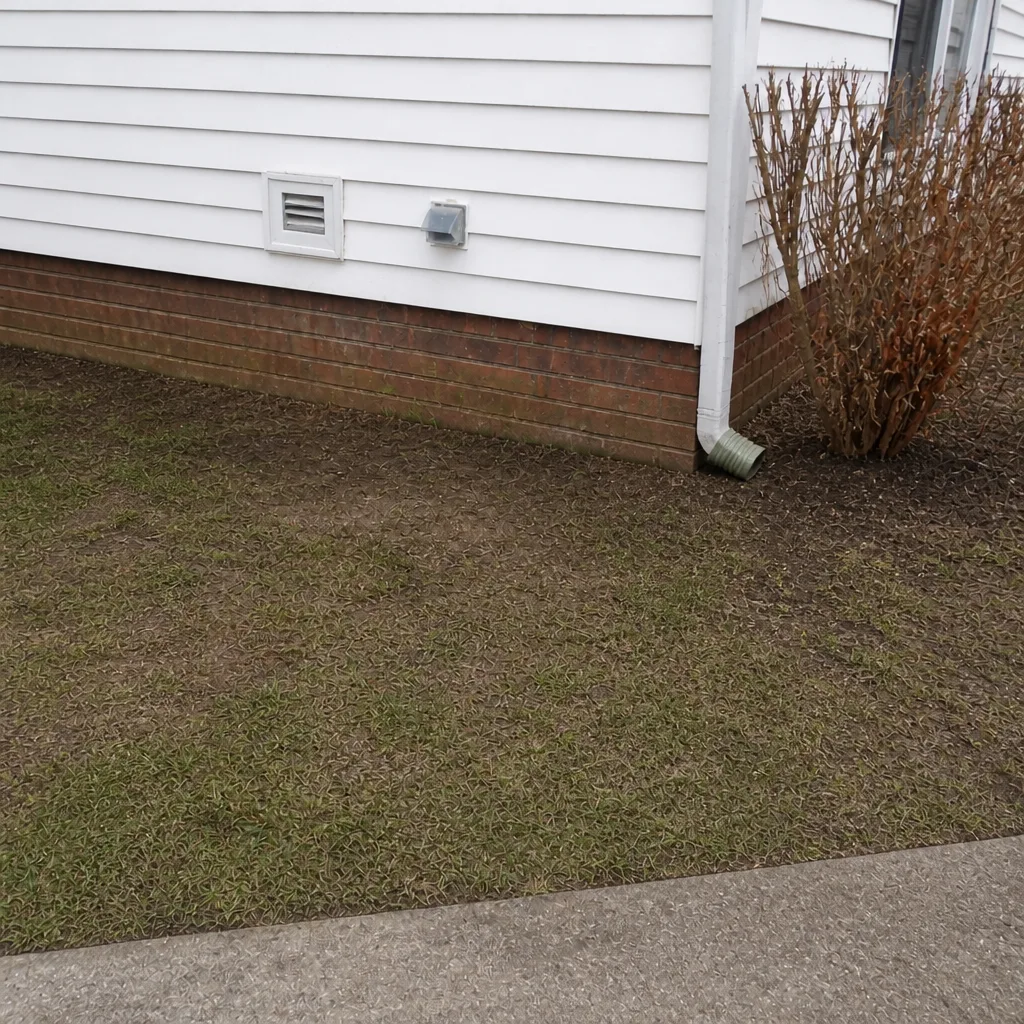
- Skipping the dryer vent. It’s a separate system with a real fire risk. Dryer vents should be checked at least once a year, and more often in high-laundry households. It’s a standard part of our dryer vent cleaning visits for good reason.
When to Call a Professional
Some situations are beyond a calendar and beyond a filter change. Call a professional if you see visible debris in registers that returns after cleaning, if there’s been water damage or pest activity in the system, if anyone in the home is having persistent allergy symptoms that get worse indoors, or if you’ve recently replaced HVAC equipment and haven’t cleaned the ducts. A professional inspection also makes sense if you’ve inherited a house without any duct service records, because the condition assessment is the only reliable way to know when the clock actually started.
Rutherford Air Duct Cleaning offers free estimates in Richmond for duct cleaning, dryer vent service, and duct repair. We use Abatement Technologies filtration equipment on every job and professional-grade Rotobrush and Nikro systems for cleaning, so what you get is a measurable result, not a pass-through. Call Richmond‘s dedicated duct specialists at (855) 606-6205 for a free estimate. We answer 24/7. Fast dispatch from 7am to 7pm, Sunday through Friday.
Frequently Asked Questions
Most Richmond homes need professional cleaning every 3 to 5 years, adjusted for occupancy, pets, duct material, and renovation history. High-occupancy or pet-heavy homes with flex duct should aim closer to every 2 years; low-occupancy homes with sealed sheet metal can stretch to 7 or more. Call (855) 606-6205 for an exact quote – estimates are free.
Yes, in homes with marginal moisture control. Richmond’s humid summers create a temperature differential on cool duct surfaces, and condensation on duct interiors accelerates biological growth. Homes with leaky returns in attics or crawlspaces are the highest risk. Call (855) 606-6205 for an exact quote – estimates are free.
You can replace filters and check registers yourself, but cleaning ductwork properly requires mechanical agitation of the interior plus negative-air containment, which no consumer equipment provides. A hose-only DIY attempt typically redistributes dust rather than removing it. Call (855) 606-6205 for an exact quote – estimates are free.
Pricing depends on system size, duct material, and contamination level. Per-vent pricing is common in the trade but it’s a poor way to quote, because the per-vent number grows as the technician finds more vents to bill for. We set one flat price per system and agree it before work starts, so the number doesn’t move once we’re on site. Call (855) 606-6205 for an exact quote – estimates are free.
Cheap quotes usually reflect a different job: a vacuum pass without mechanical agitation, consumer-grade equipment instead of professional Rotobrush or Nikro systems, and no HEPA containment. The result is a surface pass rather than a clean system. Ask for before-and-after photos of your own ducts so you can see what the equipment actually removed. Call (855) 606-6205 for an exact quote – estimates are free.
Ask for before-and-after photos of your own ductwork taken during the job. A specialist using a professional-grade cleaning system can document the interior of the runs before and after agitation. If a company won’t provide that, that’s your answer. Call (855) 606-6205 for an exact quote – estimates are free.
The Bottom Line
There is no universal cleaning schedule. Your interval is set by your home’s contamination rate, which is driven by occupancy, pets, duct material, renovation history, moisture control, and filtration. Richmond’s humid summers push the riskier end of the standard range downward for homes with leaky returns or marginal moisture. Track your ducts using register inspection so you clean based on condition, not elapsed time, and treat post-event triggers (water damage, pests, equipment replacement, fires, renovations) as overrides to any calendar. If it’s been several years, or you’ve inherited a home without service records, a professional inspection will tell you where you actually stand. For duct cleaning, dryer vent service and air duct cleaning in the Richmond area, call (855) 606-6205 for a free estimate. We answer 24/7. Fast dispatch from 7am to 7pm, Sunday through Friday.
Written by the team at Rutherford Air Duct Cleaning.
See the difference
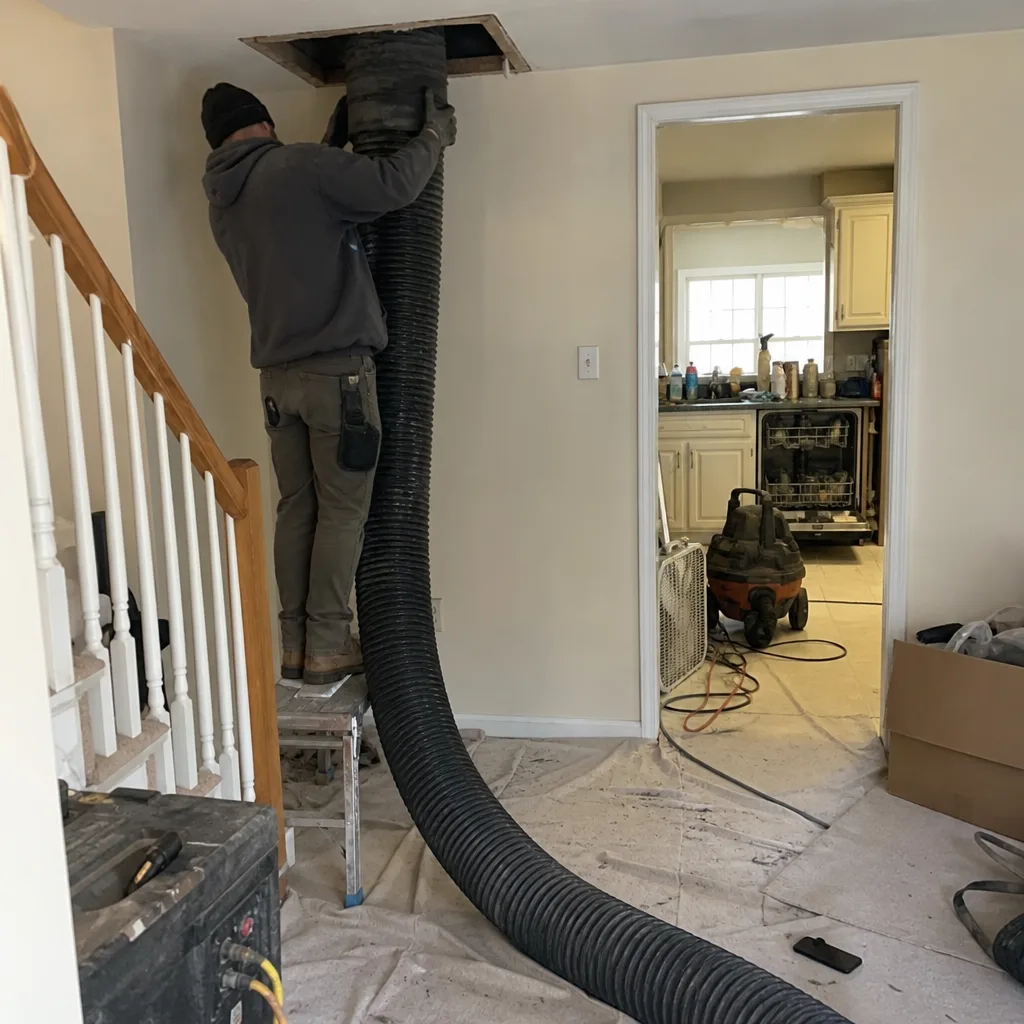 Before
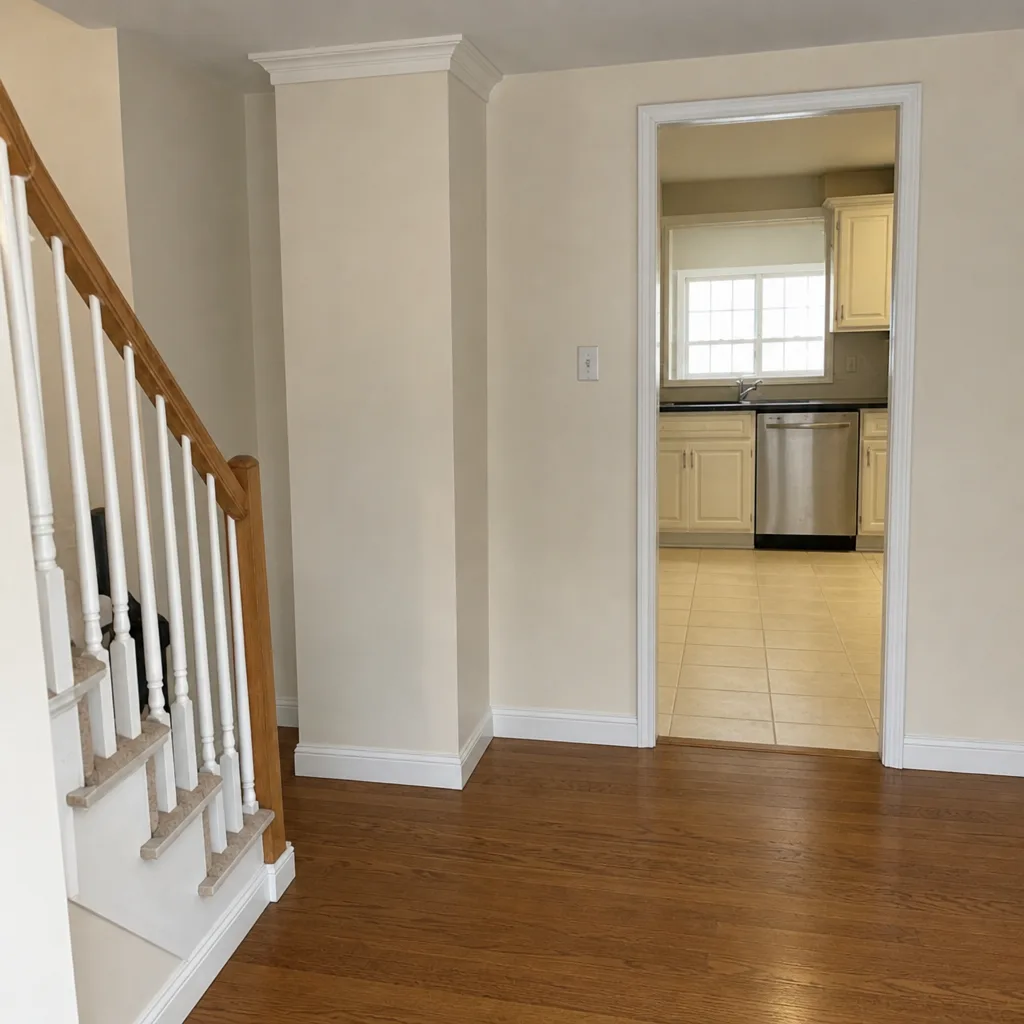 After
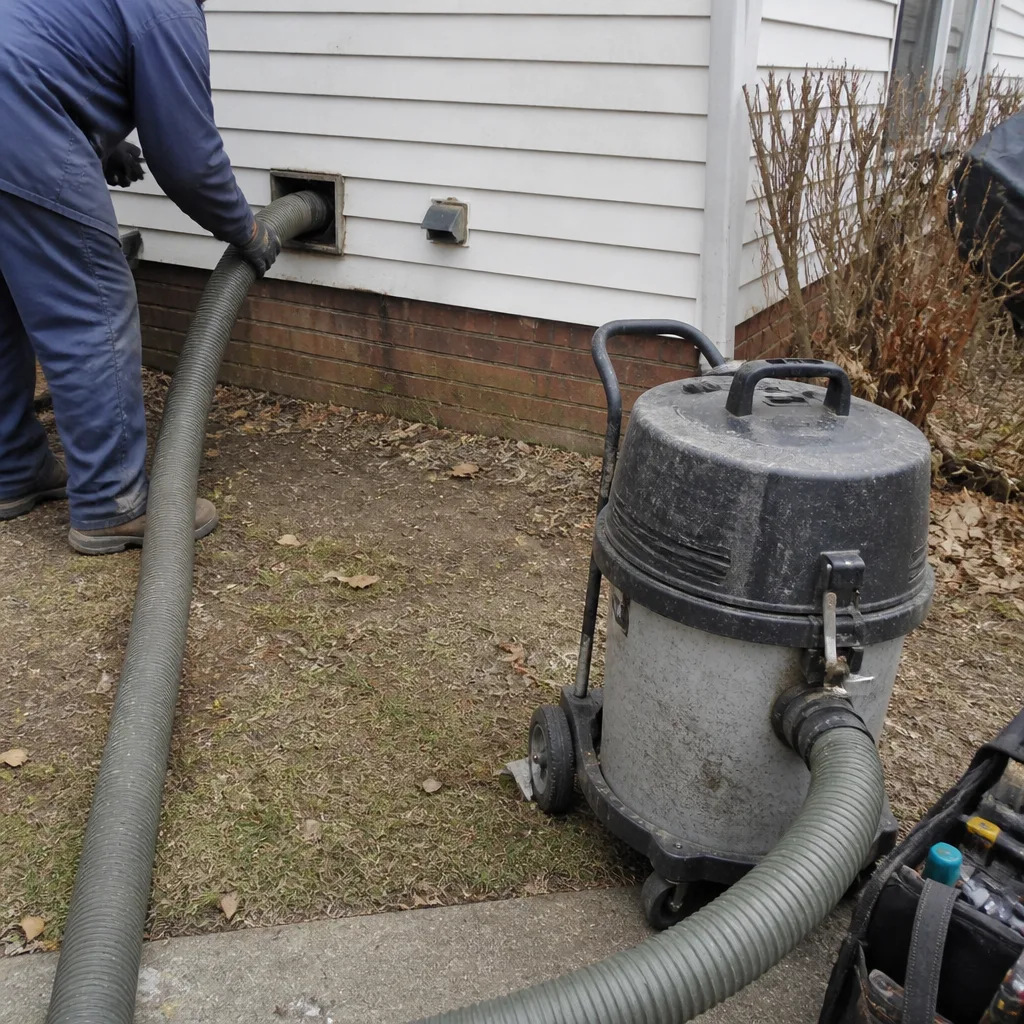 Before
 After
 Before
 After