
Last updated November 14, 2026
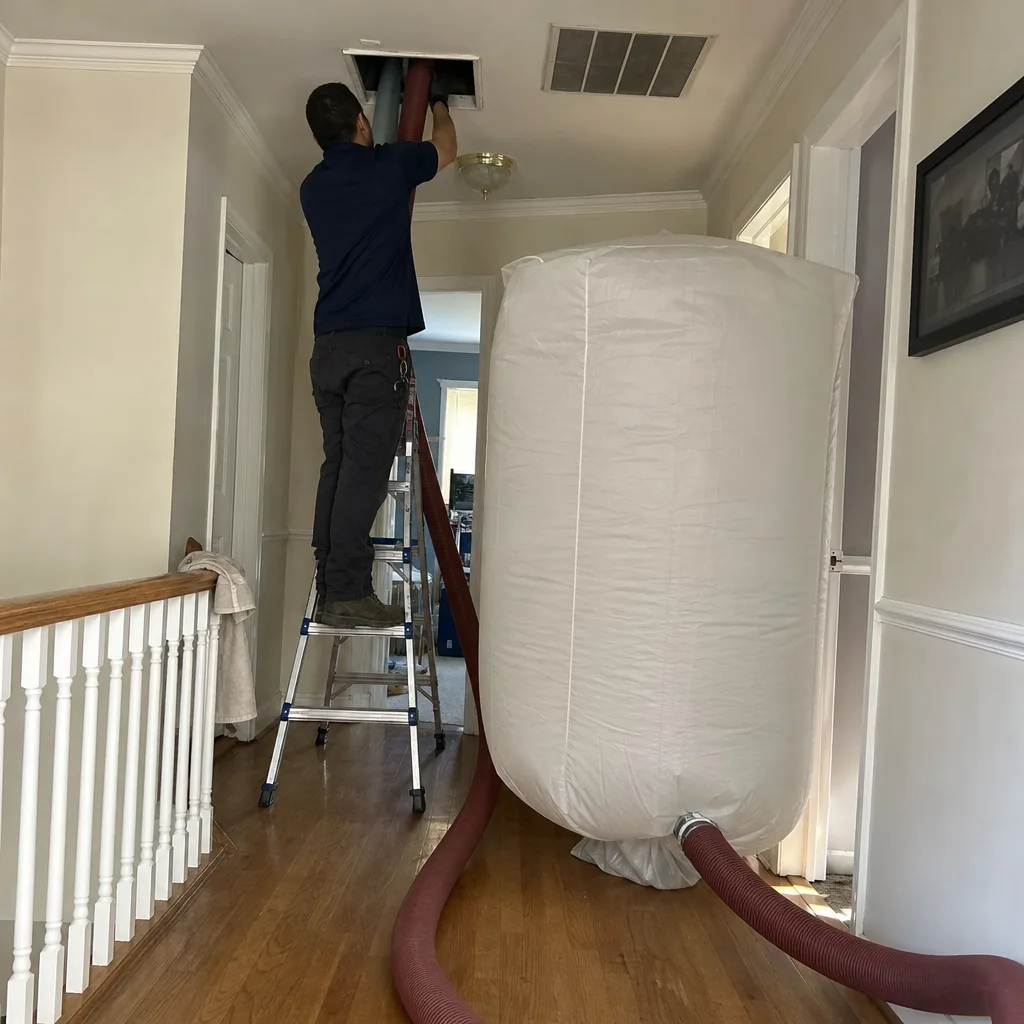
 Whole-home duct cleaning
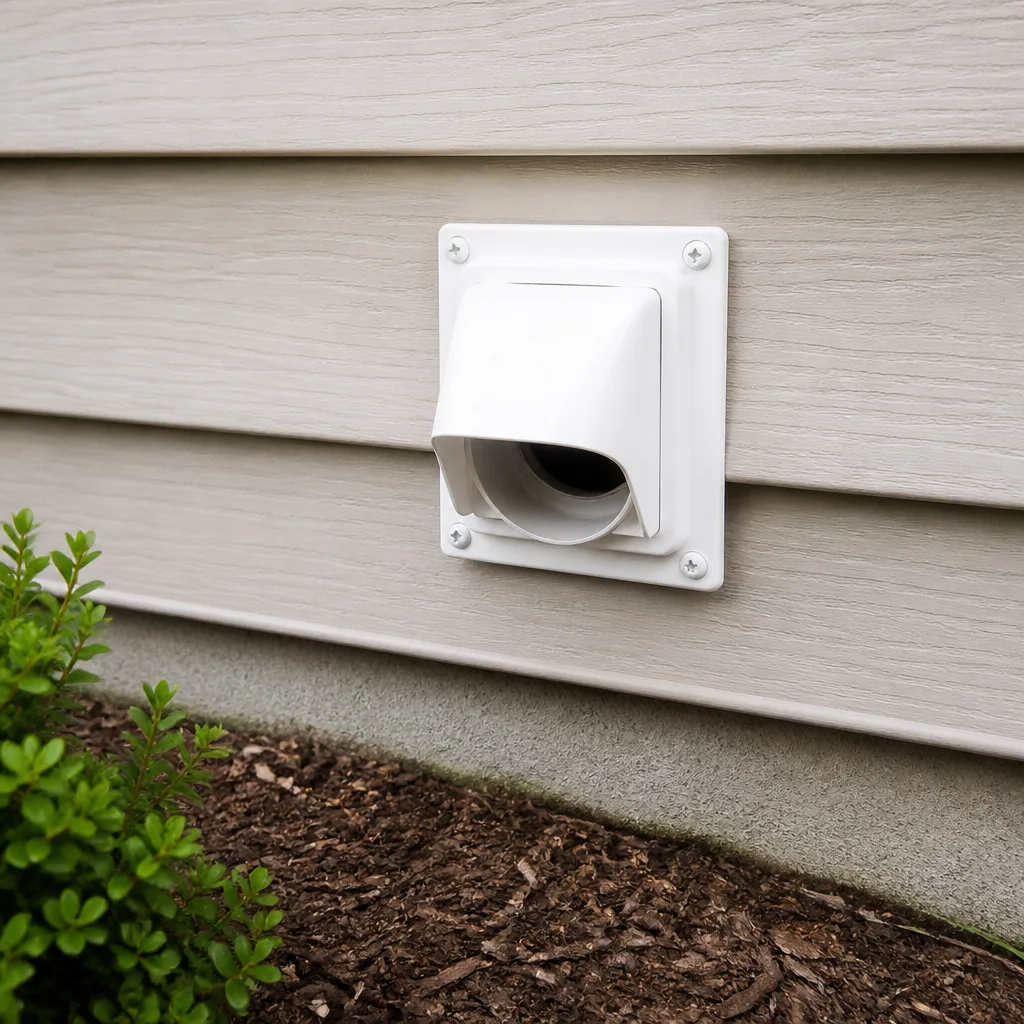 Dryer vent cleaning
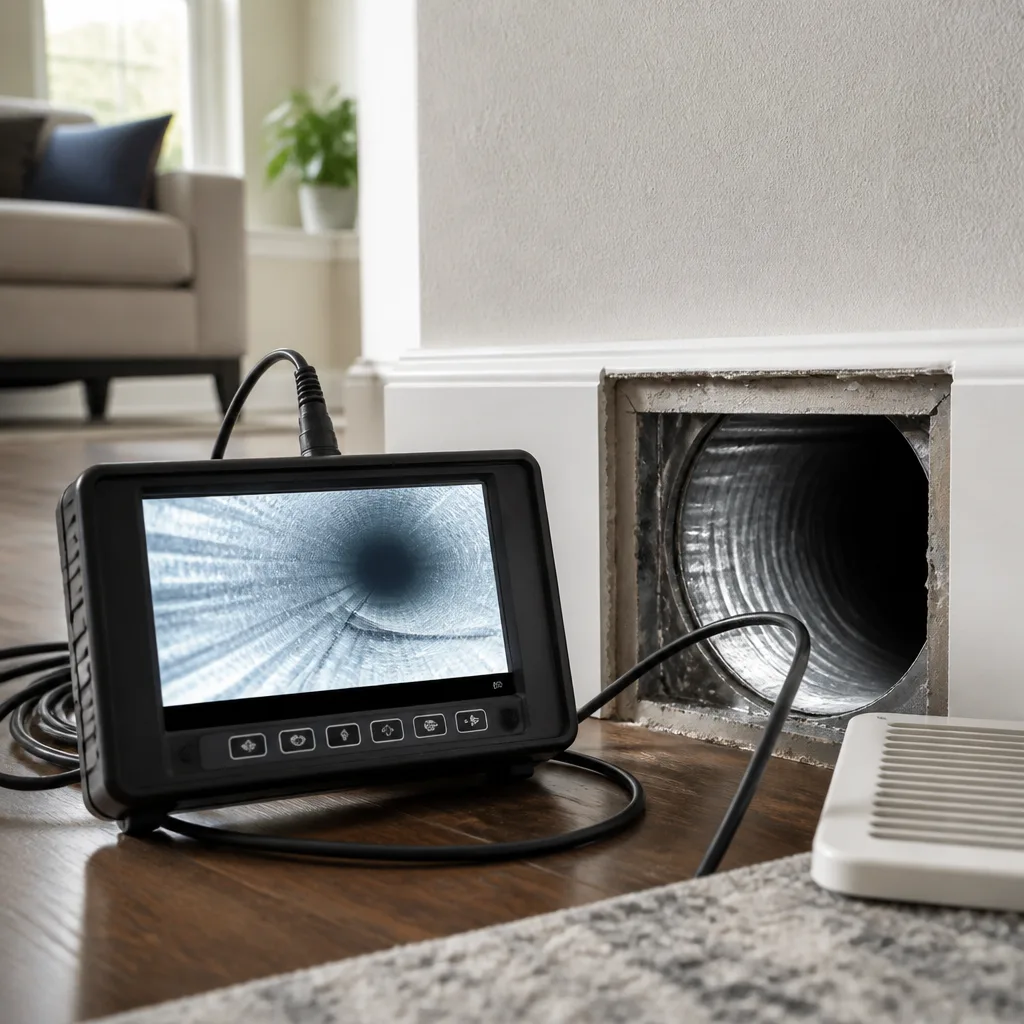 Camera inspection
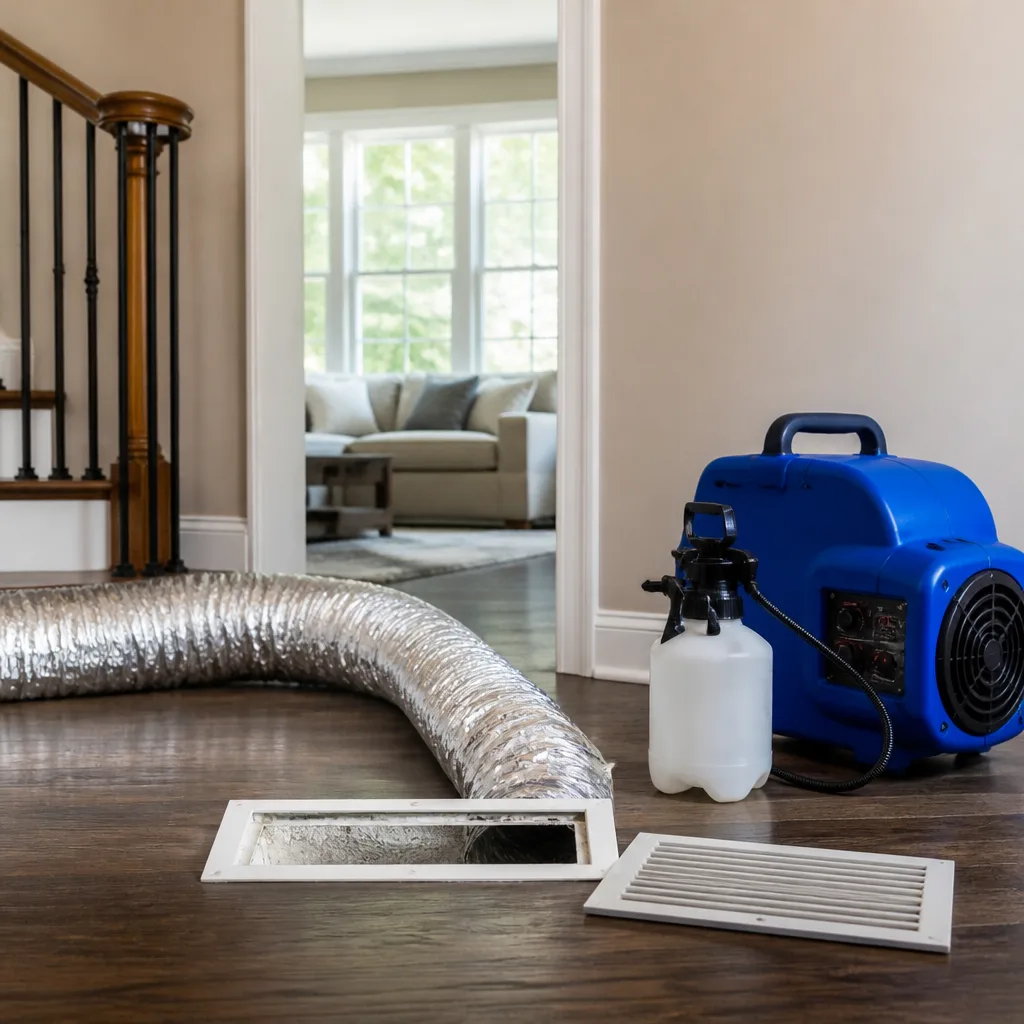 Sanitizing & deodorizing
Whole-system duct and dryer vent check with before-and-after photos - you see exactly what came out of your vents
That "$99 whole-house special" is a bait ad - the real number appears once they are in your hallway, or the "clean" is a shop-vac at the register. We photograph the inside of your ducts before and after instead.
How to Hire an Air Duct Cleaning Contractor in Richmond: A Step-by-Step Guide
Virginia does not require a specific license to offer air duct cleaning services, which means the guy with a shop vac and a magnet sign is operating in the same market as a specialist with a truck-mounted vacuum and real certification. That’s the uncomfortable part of shopping for this service in Richmond. You can’t rely on a state license check to sort the serious operators from the pretenders, so the filter has to be your own hiring process. This guide walks you through exactly how to run that filter correctly before anyone sets foot in your house. You’ll learn what to ask about equipment, what certification actually means, how to read a suspiciously low quote, and what a legitimate pre-job walkthrough looks like.
Quick Answer
Hiring an air duct cleaning contractor in Richmond means verifying three things before you book: the company’s equipment (a vacuum collection unit with real suction and negative pressure containment, not a shop vac), the technician’s credentials (NADCA ACR certification, verifiable insurance that covers interior property damage), and the quote structure (a flat per-system price after a walkthrough, not a per-vent teaser). Ask for all three in writing before you commit, and walk away from any quote that undercuts $150 for a whole-home cleaning.
Styles & brands we work with
- Whole-home duct cleaning
- Dryer vent cleaning
- Camera inspection
- Sanitizing & deodorizing
Table of Contents
- Why the Hiring Process Is Your Only Quality Filter in Richmond
- What to Ask About the Equipment (and How to Judge the Answers)
- What NADCA ACR Certification Actually Means
- How to Read a Quote: Red Flags and Fair Ranges
- Verifying Insurance That Covers Interior Property Damage
- What a Legitimate Pre-Job Walkthrough Looks Like
- What to Expect on the Day of the Job
- Twelve Questions to Ask on the Phone Before Booking
Why the Hiring Process Is Your Only Quality Filter in Richmond
In most trades, the state does some of the vetting for you. Electricians, plumbers, and HVAC technicians in Virginia work under specific licensing requirements that give you a baseline to check. Air duct cleaning sits outside that structure. There’s no separate license class for it, no state exam, no minimum equipment standard. Anyone with a van and a hose can print “duct cleaning” on the side and start taking bookings in Richmond tomorrow.
That reality shapes everything about how you should shop. Because there’s no regulatory floor, the quality gap between contractors is enormous. At the low end you have people running consumer wet-dry vacuums with brush attachments that stir up more debris than they remove. At the high end you have specialists running professional-grade systems from brands like Rotobrush and Nikro, with Abatement Technologies negative-air containment, applying cleaning standards to every duct surface. Both will answer the phone and both will quote you a price. Only one will leave your ducts actually clean.
In our experience working on duct systems across Richmond, the problems we find most often aren’t the dramatic ones. They’re the quiet ones: a system that was “cleaned” two years ago but still has a visible film of dust on the interior walls of the trunk line, because the equipment used couldn’t generate enough airflow to move it. That’s what a weak hiring filter gets you. The good news is that the right questions separate the two tiers quickly. The rest of this guide gives you those questions.
What to Ask About the Equipment (and How to Judge the Answers)
Equipment is the single most predictive thing about a duct cleaning job’s outcome. A skilled technician with the wrong tools will still do a poor job; an average technician with the right tools will usually do a decent one. So ask directly about the vacuum collection unit and how the system is contained during cleaning.
The vacuum collection unit
Every legitimate duct cleaning operation runs a vacuum collection unit – typically a truck-mounted or trailer-mounted machine – connected to the duct system through a negative-pressure setup. The unit creates suction that pulls loosened debris toward the vacuum instead of into your living room. Ask what unit the company uses and what its CFM (cubic feet per minute) rating is. CFM is the airflow number that tells you how much suction the machine produces.
Here’s how to judge the answer:
- They name a model and a CFM number. Good sign. Professional units run in the thousands of CFM; a technician who knows their gear will know the number.
- They describe “a big shop vac” or “a commercial vacuum.” Red flag. Consumer-grade vacuums cap out well below what’s needed to clean a whole-home system, and they’re not built for continuous operation.
- They can’t or won’t say. Walk away. A specialist who invested in real equipment knows the specs.
Negative pressure containment
Negative pressure means the cleaning setup keeps the duct system under slight suction so loosened debris travels to the vacuum rather than escaping through supply registers into your rooms. Ask specifically: “Do you use negative pressure containment during cleaning?” The answer should be an immediate yes, with a description of how the registers are sealed and where the vacuum connects. If they don’t know the term, you’re talking to someone who hasn’t been trained properly.
Filtration at the exhaust
On jobs with heavy buildup or after renovation dust, the better operators add HEPA filtration to the vacuum exhaust – we use Abatement Technologies filtration equipment, which is the same standard used in environmental abatement work. Ask whether the company filters the air coming out of the vacuum. If they do, you’ve found a contractor who takes containment seriously.
What NADCA ACR Certification Actually Means
You’ll see “NADCA certified” on a lot of contractor websites. It’s worth understanding what the phrase actually requires, because there’s a meaningful difference between a certified technician and a company that says it’s “NADCA compliant.”
The National Air Duct Cleaners Association (NADCA) offers the Air Systems Cleaning Specialist (ASCS) certification and, for individuals who’ve completed the training and passed the exam, the ACR (Air Duct Cleaning Specialist) credential. Certification is individual, not company-wide. It requires coursework, an exam, and continuing education to maintain. NADCA also publishes the ACR standard (Assessment, Cleaning, and Restoration of HVAC Systems), which is the technical document most reputable contractors work to.
When you call a Richmond duct cleaning company, ask two specific questions:
- “Who will be on-site, and are they NADCA certified?” The certificate belongs to a person. Get the name (or ask for the certification number) of the technician assigned to your job.
- “Are you a NADCA member company?” Membership is company-level and requires adherence to the association’s code of ethics and standards. It’s not the same as individual certification, but it’s a step up from “compliance.”
Companies that say “we follow NADCA standards” or “NADCA-compliant” without naming a certified technician are using the acronym as marketing language. It might mean they follow the standard in practice. It might mean they bought a copy of the standard once. You can’t tell from the website, so ask.
How to Read a Quote: Red Flags and Fair Ranges
Price is where the bait-and-switch reputation of this industry lives. A quote below $150 for a whole-home duct cleaning is almost always a red flag. Here’s why: a proper job for an average Richmond home takes two or more technicians several hours, uses a power vacuum and specialized tools, requires containment setup and takedown, and includes a walkthrough. That’s real equipment cost and real labor. A $99 “special” doesn’t cover it. What comes next is a technician on-site finding “problems” and upselling to a real price, or a rushed pass with equipment that can’t do the job.
What quotes should contain
- A flat price for the whole system, not a per-vent charge.
- A written scope: which components get cleaned (supply, return, registers, main trunk), how many, and whether the air handler or coil is included or extra.
- Confirmation that the price is final after the walkthrough, not subject to on-site adjustment.
- Before-and-after photos of your own ducts as part of the deliverable.
What to ask about pricing structure
Ask directly: “Is this a flat price for the whole system, or does it change based on what you find?” A specialist answers the first way. If the answer is “it depends on how many vents you have,” ask for the price per vent and the total in writing. A per-vent structure isn’t automatically wrong, but it’s how teaser pricing works, so you want the total fixed before work begins.
On average, a proper whole-home duct cleaning in Richmond runs higher than the coupon prices you’ll see in mailers, and that’s the point. You’re paying for equipment, containment, and time. Ask every contractor for a written estimate after the walkthrough, and treat the written number as the price. If anyone tries to move it after the work starts, that’s your signal to stop.
Verifying Insurance That Covers Interior Property Damage
This is the step almost no homeowner runs, and it matters. Duct cleaning involves equipment inside your home, hoses running through your living space, access to ceilings and walls, and loosened debris moving through a system connected to everything. A contractor’s general liability policy usually covers their operations. Whether it covers damage to your interior – a scuffed wall, a dented air handler, debris discharge onto furnishings – depends on the policy’s specifics.
What to ask, and how to verify:
- “Can you send me your certificate of insurance?” Any legitimate company has one and sends it without hesitation. Ask specifically for general liability coverage and its limits.
- “Does your policy cover interior property damage caused during cleaning?” Ask it in that wording. Listen for whether they answer with a specific yes or hedge.
- Call the insurer to confirm the policy is active. The certificate should list the insurer’s name and policy number. A quick call to the insurer’s agent line verifies the policy is current and covers the work described.
- Ask what happens if something is damaged. The answer should be some version of “we file a claim and we make it right.” No drama, no deflection.
If a contractor can’t produce a certificate or hedges on what the policy covers, find another contractor. The cost of skipping this step isn’t hypothetical: a damaged air handler or a stained ceiling from a containment failure runs into the thousands, and an uninsured contractor leaves that bill with you.
What a Legitimate Pre-Job Walkthrough Looks Like
Before any equipment comes inside, a professional contractor walks your system. This step is where the serious and the sloppy separate in Richmond, because a walkthrough takes time and a rush job doesn’t want to spend it.
What a real walkthrough includes
- They look at the air handler and coil and tell you what they see – is the coil accessible, is there visible buildup, is the filter housing in good shape.
- They count and inspect the supply and return registers, note the type (floor, ceiling, wall), and check for any that are blocked, painted shut, or loose.
- They check the return duct and the main trunk for signs of flex duct collapse, disconnected sections, or rodent intrusion – and tell you if the job will need repair before cleaning.
- They ask about your goals: allergies, recent renovation, a dryer that cycles slowly. The answer shapes the scope.
- They give you a written estimate after the walkthrough, with the scope in writing, before anyone touches anything.
What a rushed contractor does
- Quotes over the phone without seeing the system, then arrives with a van full of upsells.
- Starts setting up equipment before looking at the air handler.
- Pushes you to sign on the spot for a “today only” price.
- Doesn’t mention the return side, the coil, or duct condition at all.
If the walkthrough is skipped or rushed, the job is almost certainly going to be rushed too. In our experience, a thorough walkthrough is also where a contractor discovers a problem you didn’t know you had – disconnected flex duct, a collapsed trunk, a dryer vent packed with lint. Knowing before the quote is better for everyone. On the duct-repair side, we’ve built our service around exactly this: finding root-cause ductwork problems, not just cleaning around them.
What to Expect on the Day of the Job
Once you’ve verified the contractor, the day itself should follow a predictable pattern. Knowing what’s normal helps you spot anything off.
- Access setup. The team arrives, parks and runs equipment hoses from the truck to the point where the vacuum connects to the system – typically the main return or the air handler. Registers get sealed.
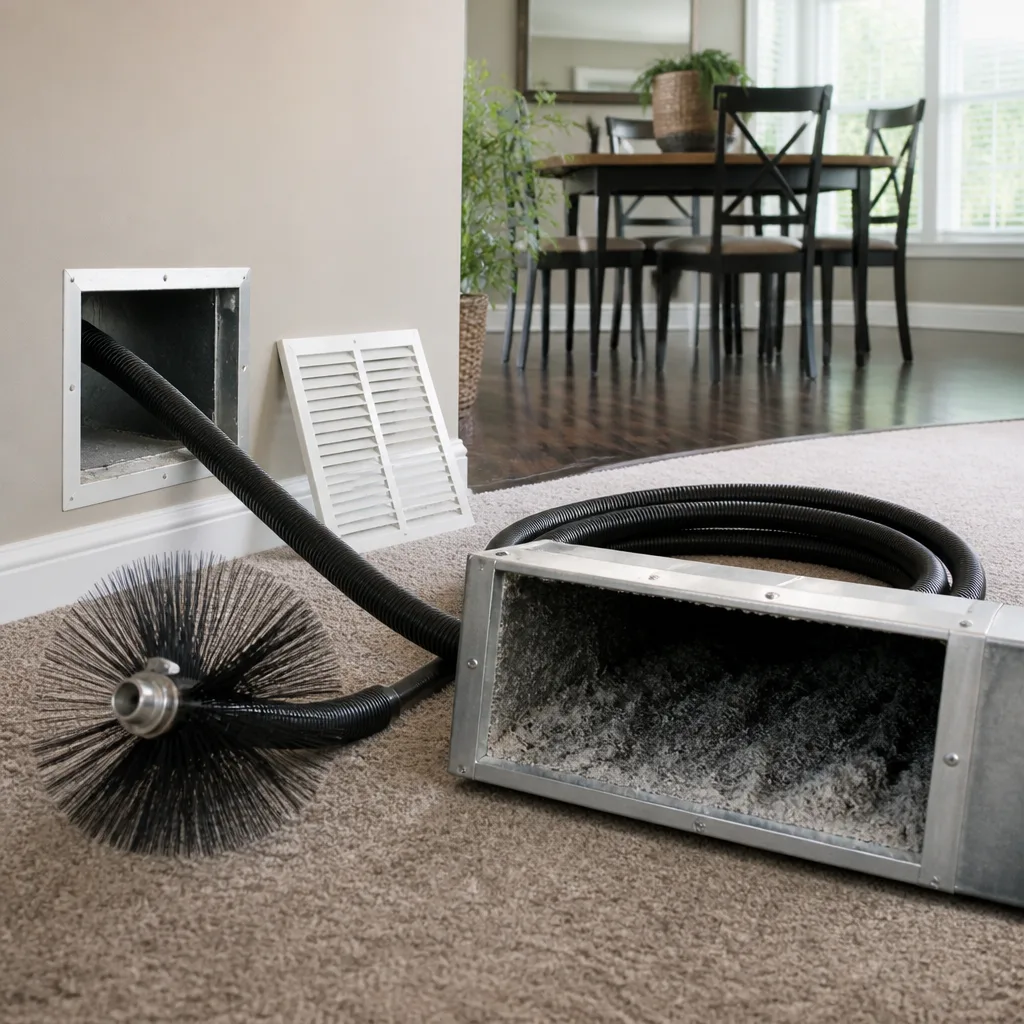
- Source removal. The vacuum starts, and the technician works through the system with agitation tools – rotary brushes, air whips, or similar – to loosen debris so the suction pulls it out. This is the part that depends entirely on the vacuum’s power and the containment you verified earlier.
- Component cleaning. Registers, diffusers, and any accessible components get cleaned by hand or with a tool.
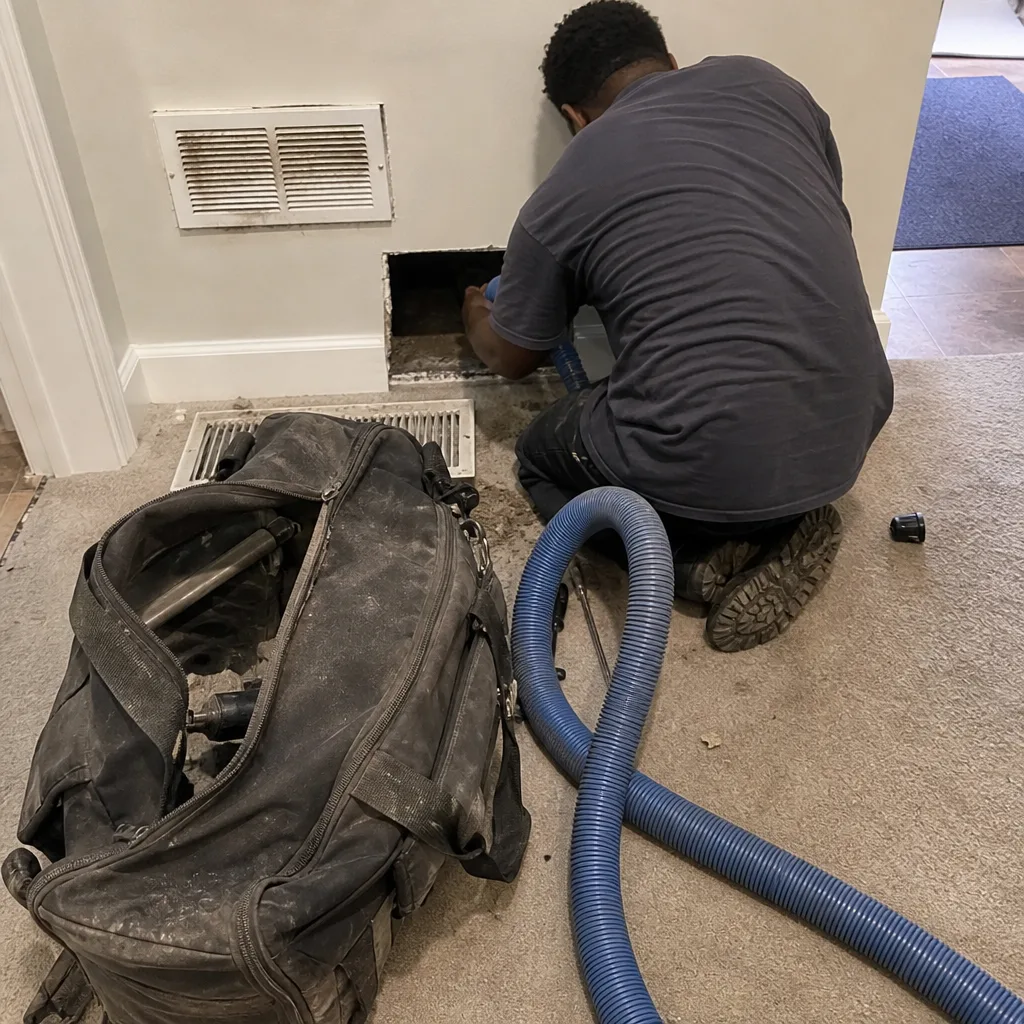
- Inspection and photos. A thorough contractor takes before-and-after photos of the duct interiors. Ask to see them before you pay.
- Walkthrough and final check. The team shows you what changed, walks you through the system condition, and confirms the price is what the written estimate said.
An average whole-home job takes a few hours, depending on the size and accessibility of the system. If the team finishes in 30 minutes and the price is suspiciously low, that’s the same problem as the low quote showing up again.
Twelve Questions to Ask on the Phone Before Booking
Here’s a phone script you can print and keep next to your phone. The first answer that goes wrong is your signal to keep shopping.
- Do you use a truck-mounted or trailer-mounted vacuum with a CFM rating, or a shop vac?
- Do you use negative pressure containment during the cleaning?
- Who will be on-site, and are they NADCA certified?
- Can you send me a certificate of insurance that covers interior property damage?
- Is your price a flat per-system price after a walkthrough, or a per-vent charge?
- What’s included in the price, and what’s an add-on?
- Will I get before-and-after photos of my own ducts?
- What does your walkthrough look like, and will it happen before we schedule?
- Do you handle duct repair, or only cleaning?
- What happens if you find a disconnected duct or a damaged section during the walkthrough?
- What does your dryer vent inspection include?
- What’s the written estimate process, and when do I get it?
Common Mistakes to Avoid
- Booking on price alone. A $99 whole-home quote is an invitation to an on-site upsell. In Richmond, the price gap between a real job and a teaser price is a warning sign, not a bargain.
- Skipping the walkthrough to “save time.” If the contractor quotes without looking at your system, you have no way to know what the final price will be or whether they know what they’re doing.
- Accepting “NADCA-compliant” as certification. It’s a phrase, not a credential. Ask for the certified technician’s name and the certificate number.
- Not asking about equipment specs. If you don’t ask about CFM and containment, you’re trusting a website to tell you something it never will. Ask directly.
- Overlooking insurance verification. A certificate in an email folder isn’t verification. Call the insurer to confirm the policy is active and covers interior damage.
- Treating a dryer vent as an afterthought. Dryer vents are a fire-safety risk and a common cause of appliances that cycle slowly. Richmond’s older housing stock often has long vent runs with bends that accumulate lint fast.
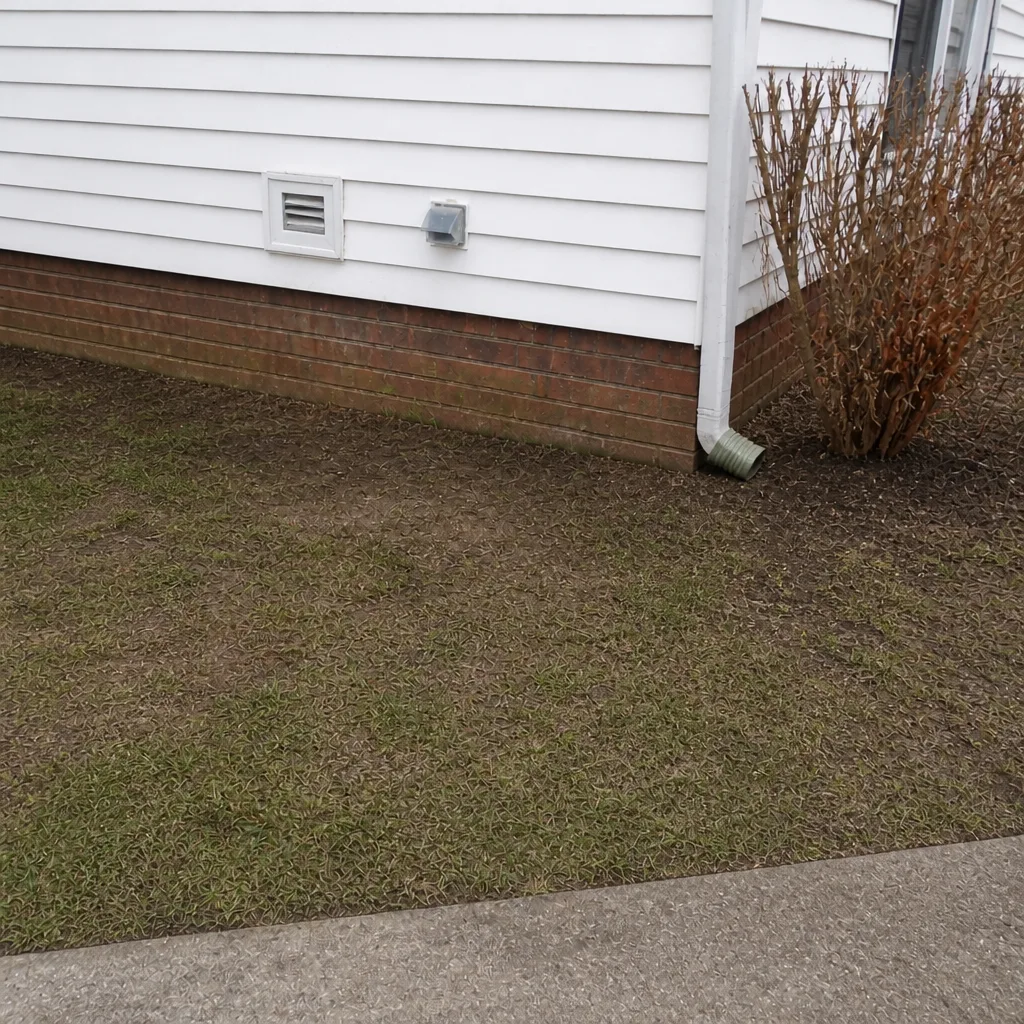
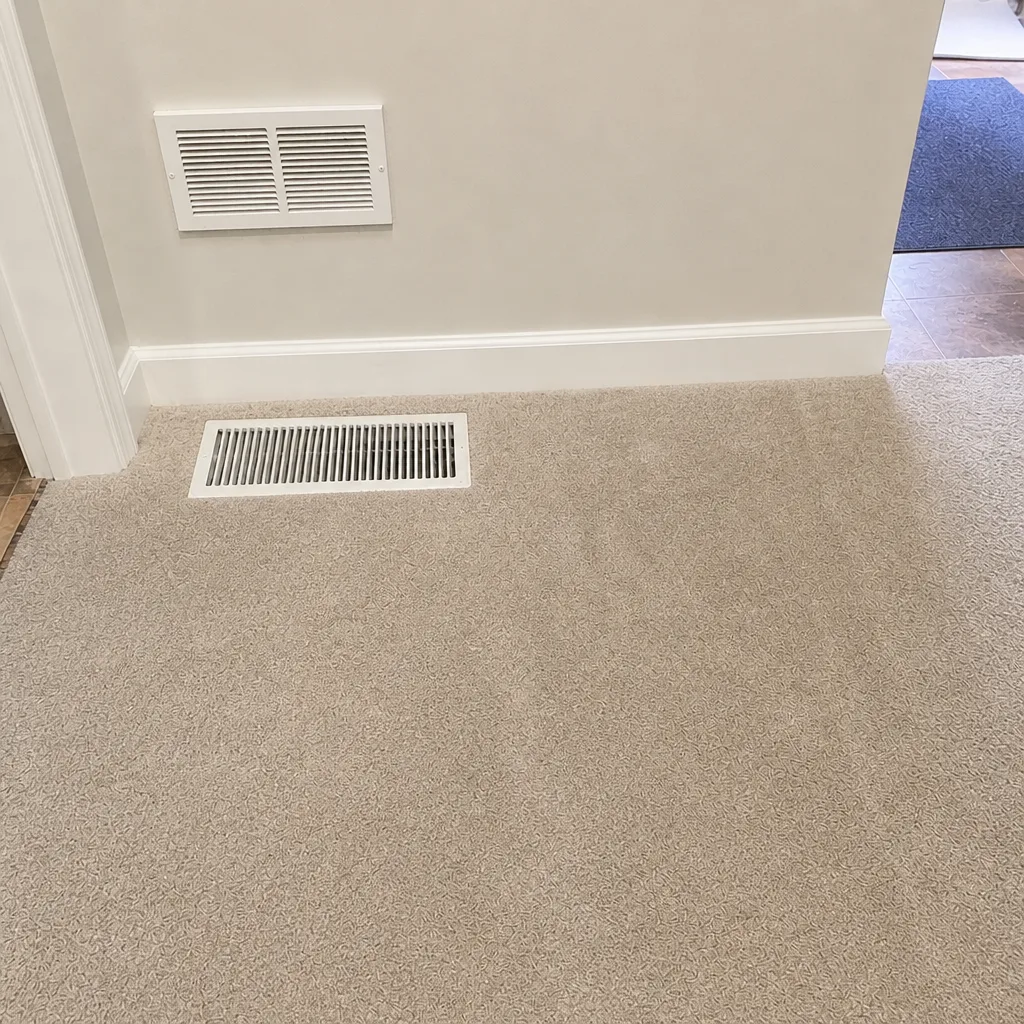
- Paying for a job without seeing the before-and-after photos. Photos of your own ducts are the only evidence the work was done. Ask to see them on the day, before the invoice.
See the difference
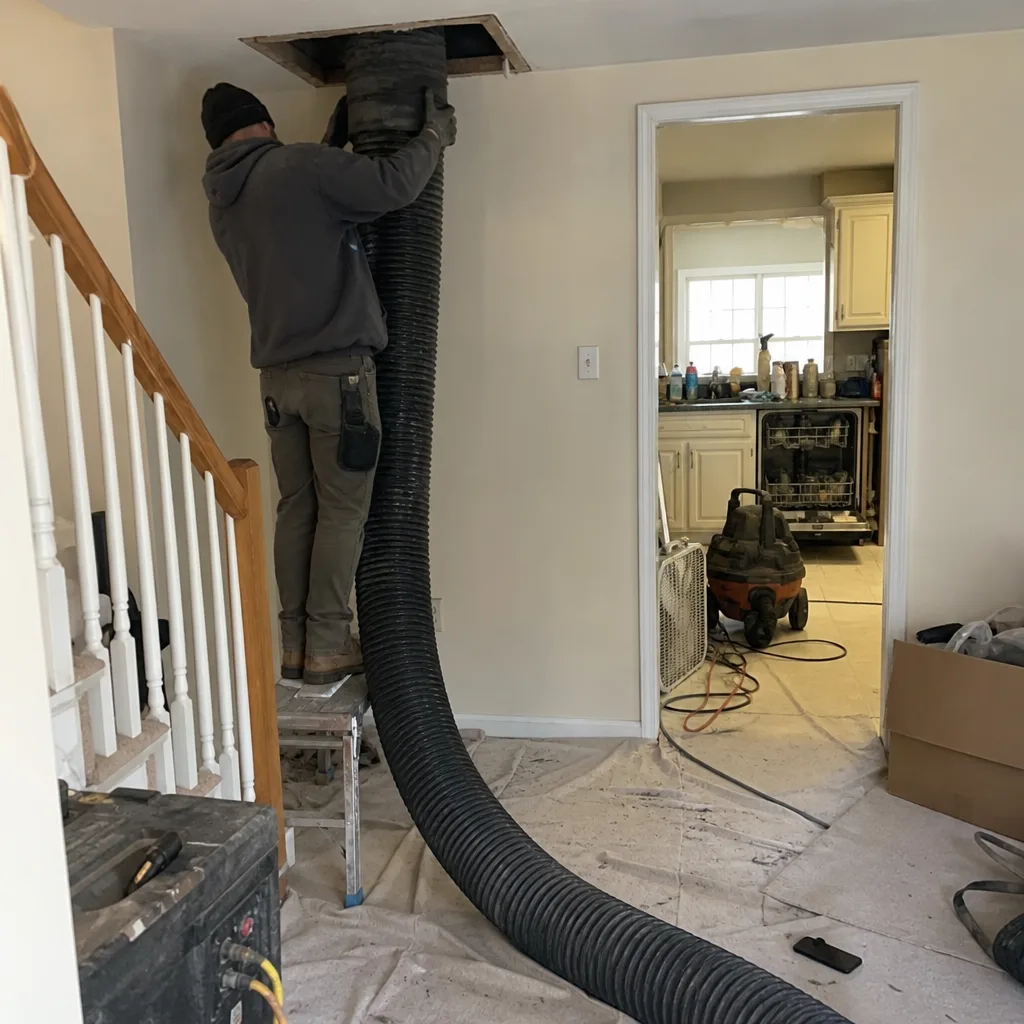 Before
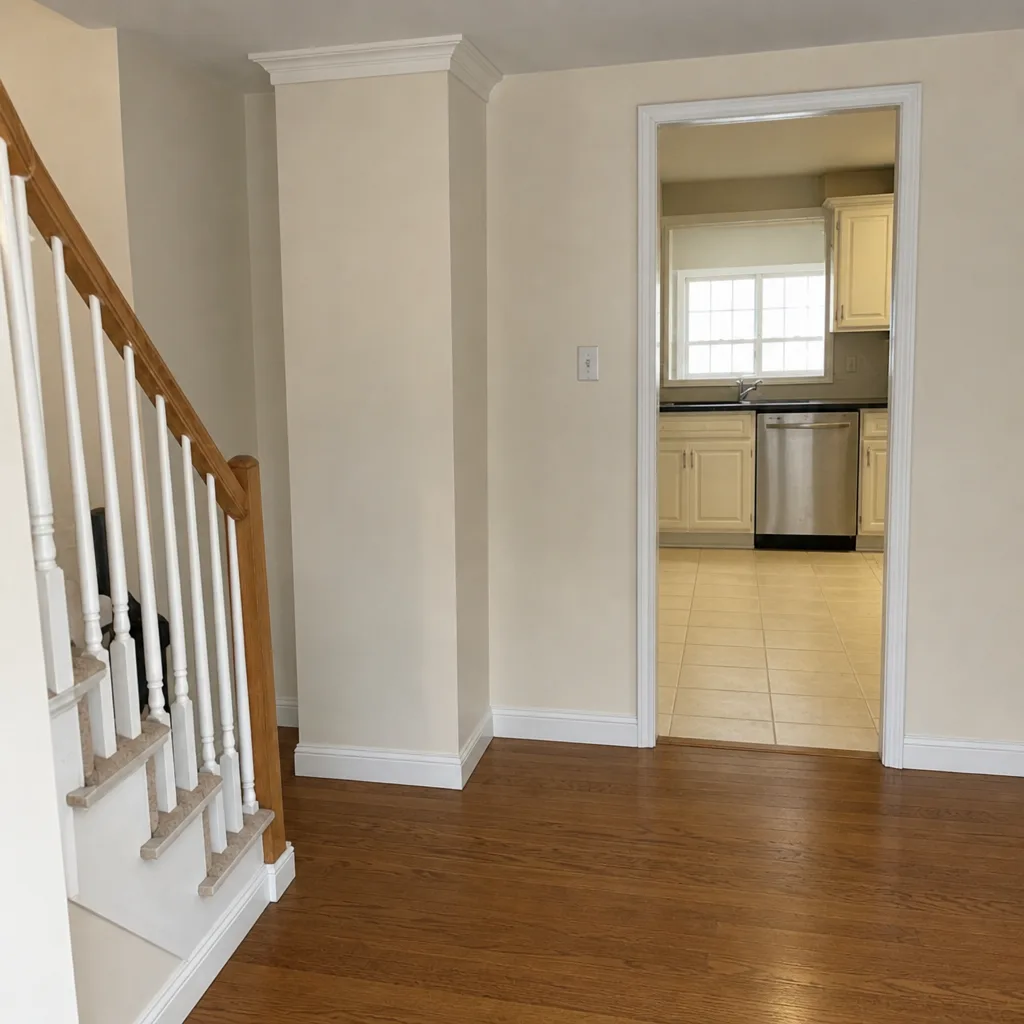 After
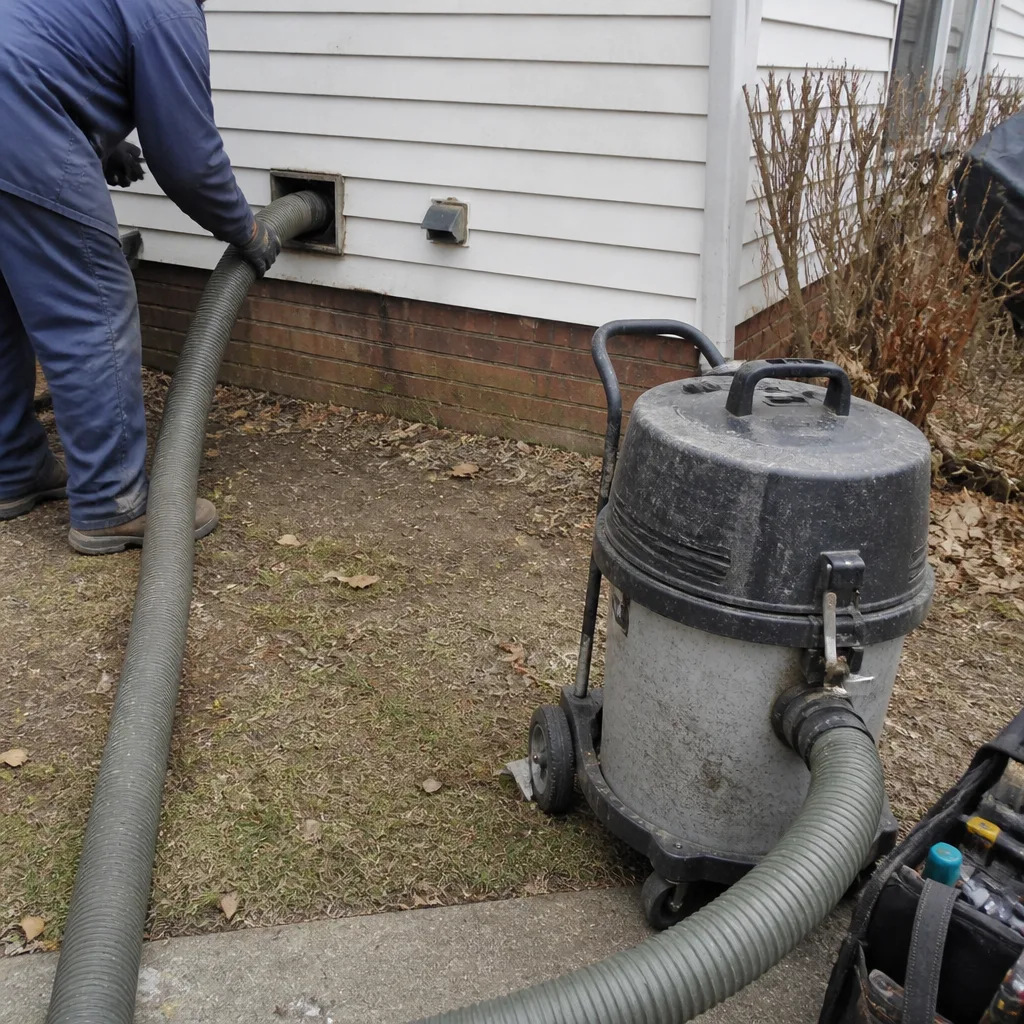 Before
 After
 Before
 After
When to Call a Professional
You don’t need a professional visit for a dusty register cover. But some situations call for a proper assessment. A home that hasn’t had its system cleaned in several years is a reasonable candidate for a walkthrough, especially if you’re noticing musty odors when the system runs or visible dust coming from supply registers. Anyone in Richmond with allergies or respiratory sensitivity should consider an assessment, and recent renovation work – drywall dust and construction debris settle into return air paths fast.
If you’re seeing rising energy bills with no obvious cause, a slow-closing dryer cycle, or unexplained hot and cold spots, the underlying issue could be a compromised duct system rather than a cleaning problem. A walkthrough tells you which. A dryer that takes two cycles to dry a load is worth having looked at sooner rather than later.
We offer free estimates in Richmond. Call (855) 606-6205. We answer 24/7. Fast dispatch from 7am to 7pm, Sunday through Friday.
Frequently Asked Questions
Most homes in Richmond don’t need duct cleaning on a strict schedule. A reasonable interval is every few years for a normally maintained system, more often if you have pets, allergies, recent renovation, or a system that’s been running with poor filtration. If you’re unsure, book a walkthrough and ask the technician whether cleaning is actually warranted. A good contractor will tell you if the answer is no. Call (855) 606-6205 for an assessment.
The low quotes use cheaper equipment, skip containment, and rely on upsells once the technician is on-site. A $99 whole-home quote doesn’t cover the labor and equipment of a real job in Richmond, so the difference gets made up on the invoice or in a rushed, incomplete cleaning. If a quote seems too low to be true, ask what equipment and containment they use and get a written estimate before work starts. Call (855) 606-6205 for a walkthrough and a firm number.
You can clean the register covers, vacuum what’s reachable at the supply and return grilles, and stay on top of filter changes. The duct interiors need professional negative-pressure equipment and agitation tools to actually remove settled debris. A consumer vacuum doesn’t have the airflow to move it, and pushing debris around inside the ducts can make indoor air quality worse in the short term. Call (855) 606-6205 for a professional assessment.
The most direct answer is before-and-after photos of your own ducts, and a written walkthrough on the day the team leaves. Ask to see the photos before you pay. A contractor who used real equipment will have visible evidence. Call (855) 606-6205 to book a job with that evidence included.
Yes. Older homes in neighborhoods like the Fan, Church Hill, and Ginter Park often have original ductwork or additions that changed the system’s layout over the years. That means flex duct that’s collapsed, joints that have separated, and returns that were added long after the original build. Ask about duct repair capability, not just cleaning. A contractor who only cleans can’t fix what they find. Call (855) 606-6205 for a walkthrough that accounts for this.
Duct repair covers disconnected sections, collapsed flex duct, sealed-off registers, and leaks at joints between duct segments. You may need it if a technician finds compromised ductwork during the walkthrough – which is common in Richmond homes with older systems. Repair is what lets a cleaning job actually improve airflow, because cleaning a leaky duct is cleaning the air you’re not using. Call (855) 606-6205 and we’ll tell you what the walkthrough turns up.
The Bottom Line
Virginia doesn’t require a license to offer air duct cleaning, so your hiring process is the only quality filter that matters. The three things to verify every time: a vacuum collection unit with a real CFM rating and negative pressure containment (ask what the setup is), NADCA ACR certification for the technician on-site (ask for a name, not a website claim), and insurance that actually covers interior property damage (ask for the certificate and call the insurer to verify). Skip the $99 teasers, book the walkthrough, get the flat per-system price in writing, and ask for before-and-after photos of your own ducts before you pay. In Richmond, that filter is the difference between a real cleaning and a wasted afternoon.
Rutherford Air Duct Cleaning works with professional-grade equipment – Rotobrush and Nikro duct cleaning systems, Abatement Technologies filtration – and handles cleaning, dryer vent service, and duct repair under one company. Our technicians have up to 9 years of experience. Call (855) 606-6205 for a free estimate. We answer 24/7. Fast dispatch from 7am to 7pm, Sunday through Friday.
Written by the team at Rutherford Air Duct Cleaning.